Kiyomizu-dera Temple: plan your Kyoto visit
Contents
- 1. History and Significance
- 2. The Main Hall and Wooden Stage
- 3. Otowa Waterfall
- 4. Jishu Shrine
- 5. Other Highlights Within the Complex
- 6. How to Get There
- 7. Entrance Fees and Opening Hours
- 8. The Walk to Kiyomizu-dera: Sannenzaka and Ninenzaka
- 9. Tips for Visiting Kiyomizu-dera
- 10. Sources and background
- 11. Frequently Asked Questions
Kiyomizu-dera combines a hillside Buddhist temple, views over Kyoto and a walk through Higashiyama. Its wooden stage gave Japanese the saying “to jump off the stage of Kiyomizu”, meaning to make a bold decision.[1]
The temple stands on Mount Otowa in eastern Kyoto. Allow for the uphill approach rather than treating arrival at a nearby station as arrival at the temple.
Plan the Main Hall and Otowa Waterfall first. Allow about 60 to 90 minutes for the main temple visit, plus the uphill approach, queues and rests. A longer Higashiyama walk or optional halls need additional time. Jishu Shrine is closed for renovation, so its stones are not an available stop.[2]
| Access option | When it fits | What to allow for |
|---|---|---|
| City Bus 206 | Ordinary bus from Kyoto Station | Flat-zone fare 230 JPY adult or 120 child[3], about 16 minutes to Gojozaka[4], then the uphill walk |
| EX100 or EX101 | Weekends and holidays from stop D1 | 500 JPY adult or 250 child, front-door boarding and different Gojozaka stops[5] |
| Walk from Keihan Kiyomizu-Gojo | If the uphill walk suits your mobility | About 25 minutes[6] |
History and Significance
Kiyomizu-dera was founded in 778. Its founding legend tells of the monk Kenshin, later called Enchin, who followed a dream north from Nara, found a pure spring at Otowa Waterfall and met the hermit Gyoei-koji, who gave him a sacred tree to carve into a thousand-armed Kannon.[1]
Two years later the warrior Sakanoue no Tamuramaro and his wife Miyoshino Takako helped Kenshin build a temple for the Eleven-Headed Thousand-Armed Kannon and named it Kiyomizu, “pure water”, after the clarity of the waterfall. Fire destroyed most of the buildings more than ten times, and most of the present buildings were reconstructed in 1633.[1]
Kiyomizu-dera is part of the UNESCO World Heritage property Historic Monuments of Ancient Kyoto. Since 1965 it has been the head temple of the Kita-Hosso school of Japanese Buddhism.[1]
Things to Do
Offers are only loaded from GetYourGuide after you click. GetYourGuide can then process your IP address and set cookies. Privacy Policy
GetYourGuide partner offers. GoAsia may earn a commission if you book through these offers. Check whether tickets or transfers are included, and follow the attraction's official booking and admission rules.
The Main Hall and Wooden Stage
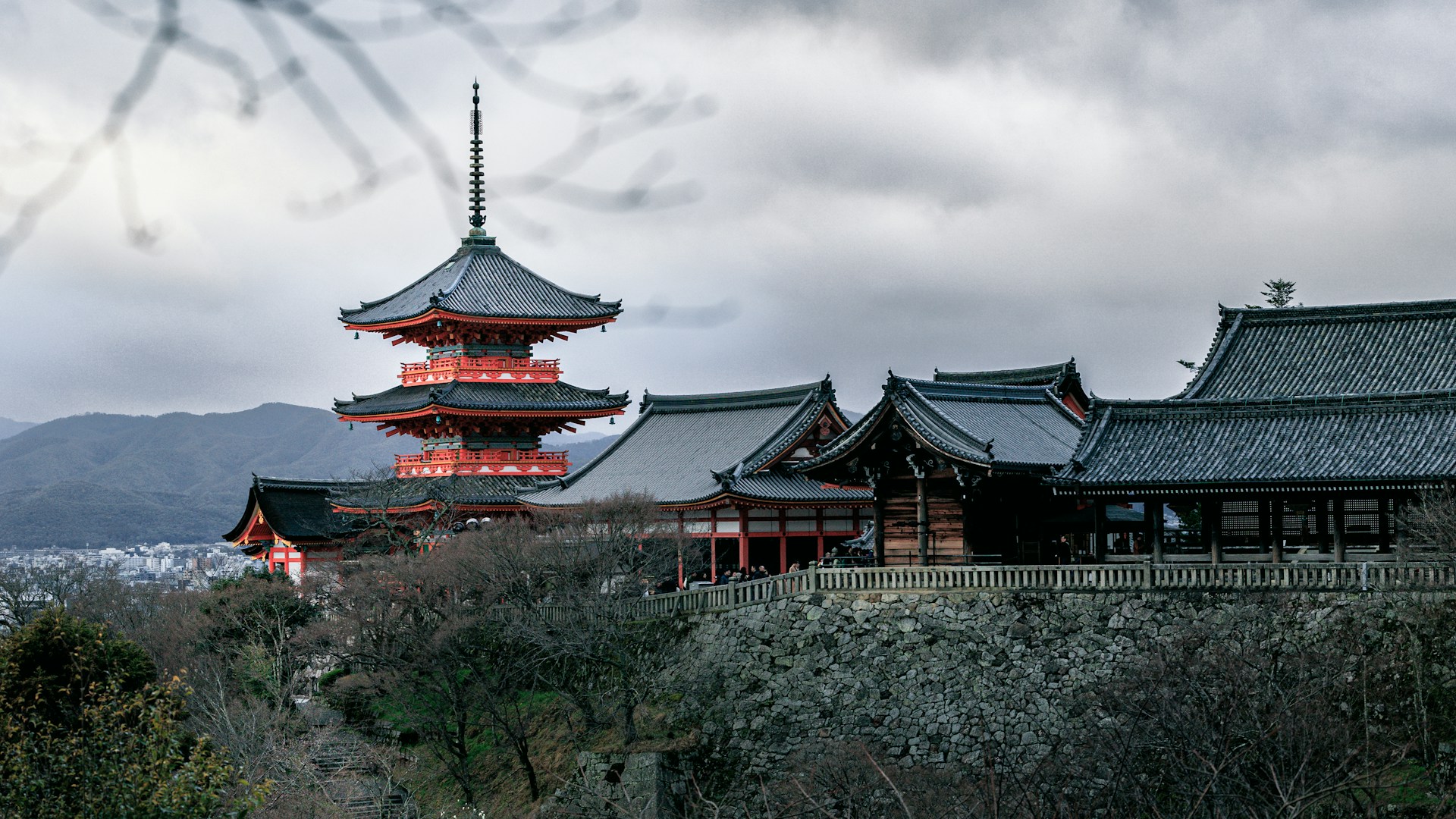
The wooden stage, or butai, hangs from the Main Hall nearly 13 metres above the slope. It stands on 18 large zelkova pillars joined by rails, without a single nail.[1] The platform offers a view across Kyoto.
The principal image is the Eleven-headed Thousand-armed Kannon, enshrined in the innermost part of the Main Hall. The inner sanctuaries are usually closed and open only on special occasions such as the Thousand-day Prayer.[1]
Cherry blossoms in spring and coloured leaves in autumn frame the temple, and the special night viewings fall in late March to early April and late November.[1][6]
Otowa Waterfall
Otowa Waterfall has three streams. Visitors catch the water with ladles and pray for the purification of the six senses and for their wishes to come true.[7]
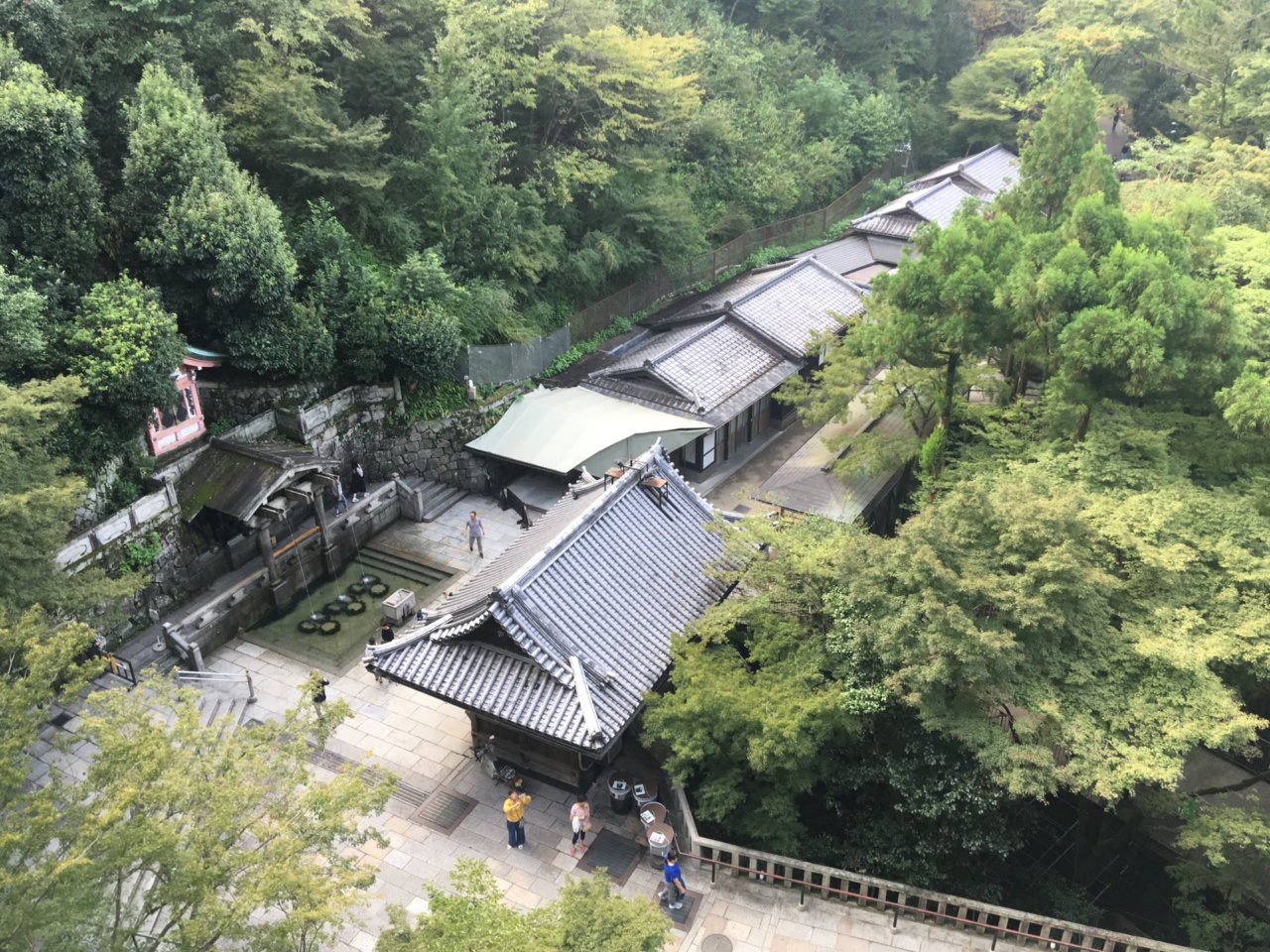
Follow the signs and staff instructions at the waterfall, keep the shared area clear and allow time for a queue.
Jishu Shrine
Behind the Main Hall is Jishu Shrine, dedicated to Okuninushi and associated with matchmaking. Two stones stand in front of it, and walking from one to the other with closed eyes is a shrine tradition said to bring luck in love.
Jishu Shrine is closed for renovation, and its own website gives no reopening date.[2] Skip the stones and the charm counter on this trip.
Other Highlights Within the Complex
The grounds cover 130,000 square metres along the slope of Mount Otowa and hold thirty temple buildings, including the Main Hall, a national treasure.[1]
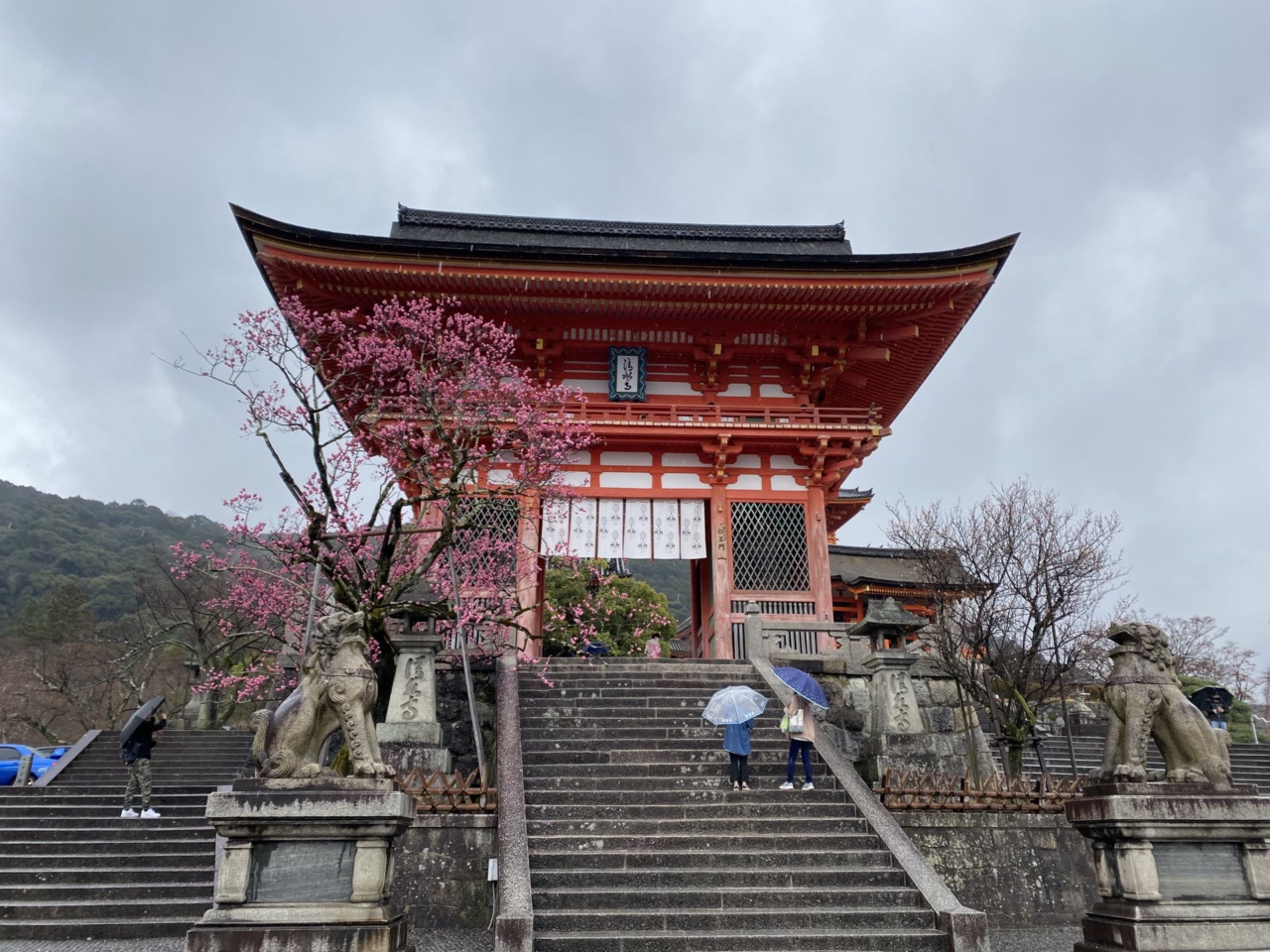
- Nio-mon Gate. This is the temple’s main entrance. The two-storey gate was taken apart and refurbished in 2003.[7]
- Three-storied pagoda. Its vermilion exterior is another landmark within the temple grounds. Use the designated paths.
- Okuno-in. This hall stands above Otowa Waterfall. Its stage looks back towards the Main Hall and Kyoto.
How to Get There
Kiyomizu-dera sits in the Higashiyama hills on the eastern side of Kyoto. There is no train station directly at the temple, so most visitors arrive by bus or on foot. The temple has no car park of its own.[6]
From Kyoto Station, City Bus 206 runs to Gojozaka in about 16 minutes.[4] The flat-zone fare is JPY 230 per adult or JPY 120 per child.[3] On Saturdays, Sundays and holidays, the Limited Express buses EX100 and EX101 leave from stop D1 and reach Gojozaka in about 12 minutes without stops.[4] The fare is JPY 500 per adult or JPY 250 per child, paid at the front door when you board.[5] The EX100 stops at Gojozaka stop C and the EX101 at stop B.[4] From the Gojozaka stops, the walk uphill to the temple takes about 10 to 12 minutes.[6][4] Alternatively, walk uphill from Keihan Kiyomizu-Gojo Station in about 25 minutes.[6]
For the return trip, buses 202 or 207 from Gojozaka take you to Kujo (Oishibashi) in about 12 minutes, and the subway then takes 2 minutes to Kyoto Station. That is about 20 minutes in total and a good way to avoid a crowded bus 206.[4] During the tourist season the southbound Gojozaka stop closes, and you board at Kiyomizu-michi stop D instead.[4]
Entrance Fees and Opening Hours
Admission is JPY 500.[8] Visitors with a disability certificate and one companion enter free; show the original certificate at the entrance.[9]
The temple opens at 06:00 and closes at 18:00 for most of the year. In 2026 closing is 18:30 from 1 July to 31 August (except on night-viewing dates) and in December. Special night viewing runs on 27 March to 5 April, 14 to 16 August and 21 to 30 November 2026, closing at 21:30 with last entry at 21:00. Evening opening applies only on those dates.[6]
The Walk to Kiyomizu-dera: Sannenzaka and Ninenzaka
Two slopes lead up to the temple: Gojozaka and Chawanzaka, with stairs at the upper end, or Kiyomizu-zaka from the Kiyomizu-michi stop, a walk of about 15 minutes lined with souvenir shops. Chawanzaka is the less crowded way up.[4] Ninenzaka and Sannenzaka can form part of a longer Higashiyama walk, and the shops there keep their own opening hours.
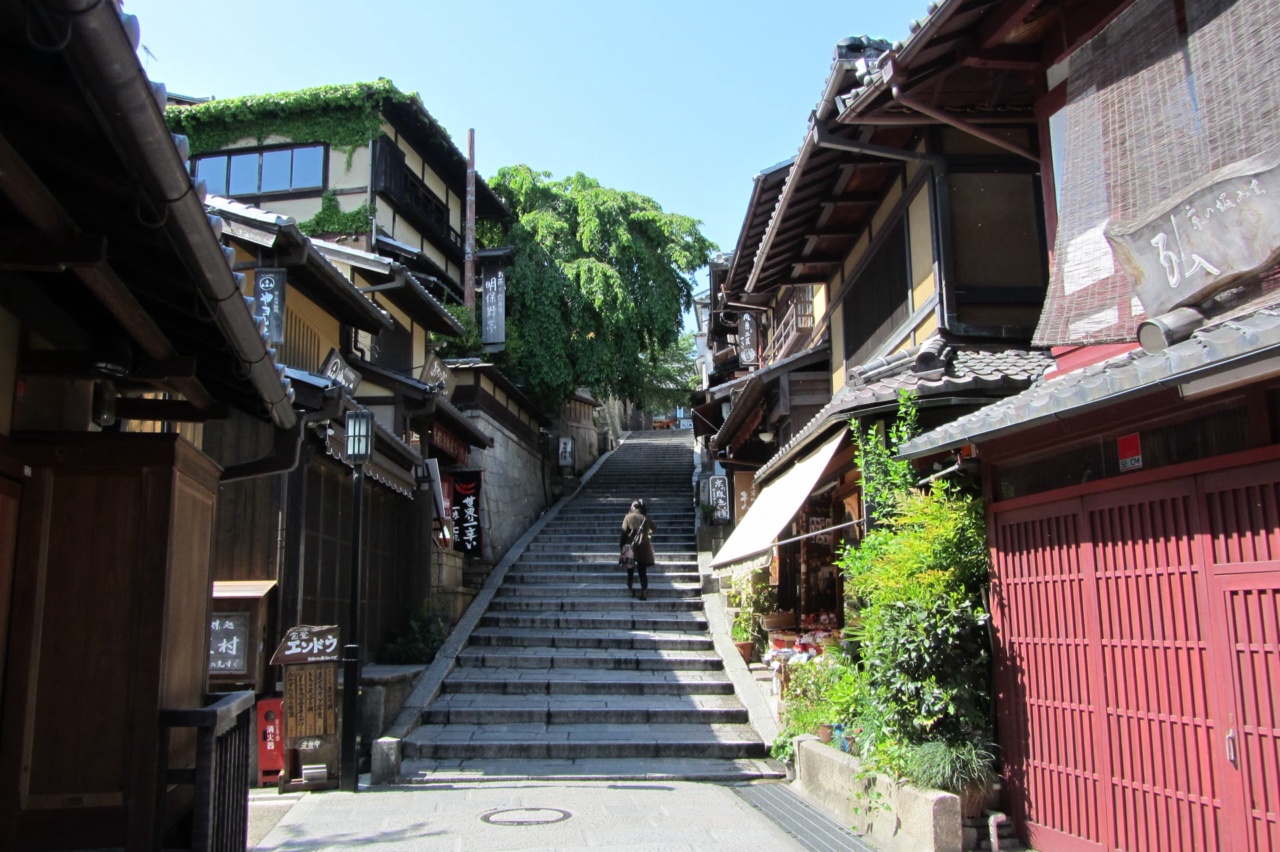
Take the sloping approach slowly, especially on wet steps. The surrounding streets offer places to pause for tea or shopping.
Tips for Visiting Kiyomizu-dera
- Come early. The temple opens at 06:00, and an early start gives you the hillside before the day gets busy. Allow extra time for queues and uphill walking in the busy seasons.
- Prepare for slopes and follow temple rules. Wear suitable shoes and ask staff about the accessible route and facilities if you need them. The grounds are non-smoking, and drones, tripods and monopods are prohibited. Eating on the grounds is not allowed, except for drinks in containers with a lid. Do not block paths; commercial shoots and livestreaming are not permitted.[9]
- Combine with Higashiyama. You can continue north through Sannenzaka and Ninenzaka. Allow extra time if you add other temples, shops or Gion.
- Check the special night-viewing dates. In 2026 the temple stays open until 21:30, with last entry at 21:00, only on the dates listed above.[6]
- Compare walking and bus access. Kiyomizu-Gojo Station is another starting point for the uphill walk, about 25 minutes.[6] Choose according to your mobility, weather and the day's crowds.
- Skip Jishu Shrine on this trip. It is closed for renovation, so its stones and on-site charms are not available.[2]
Sources and background
Numbers in the text such as [1] refer to these sources.
- [1] Kiyomizu-dera Temple: Learn: history, Main Hall and wooden stage. Retrieved October 20, 2026.
- [2] Jishu Shrine: Official closure notice: renovation and reopening date not determined. Retrieved October 20, 2026.
- [3] Kyoto City Transportation Bureau: City bus payment methods and regular versus express fares. Retrieved October 20, 2026.
- [4] Kyoto City Tourism Association: 2026 express-bus guidance and alternative return via Kujo. Retrieved October 20, 2026.
- [5] Kyoto City Transportation Bureau: EX100 and EX101: boarding, fares and Gojozaka stops. Retrieved October 20, 2026.
- [6] Kiyomizu-dera Temple: 2026 visiting hours and entrances. Retrieved October 20, 2026.
- [7] Kiyomizu-dera Temple: Grounds, Otowa Waterfall and 2026 special visits. Retrieved October 20, 2026.
- [8] JR Central: Kiyomizu-dera: admission and opening hours. Retrieved October 20, 2026.
- [9] Kiyomizu-dera Temple: Visitor questions: wheelchair route, facilities and conduct. Retrieved October 20, 2026.
Frequently Asked Questions
Kiyomizu-dera was founded in 778 and belongs to the UNESCO World Heritage property Historic Monuments of Ancient Kyoto. Its stage, held up by 18 zelkova pillars, stands nearly 13 metres above the slope. Otowa Waterfall and the Main Hall are central to the visit. Jishu Shrine is closed for renovation, with no reopening date announced, so skip its stones and charm counter on this trip.
Admission is JPY 500. Visitors with a disability certificate and one companion enter free. Bring the original certificate.
City Bus 206 runs from Kyoto Station to Gojozaka in about 16 minutes; the flat-zone fare is JPY 230 per adult or JPY 120 per child. On Saturdays, Sundays and holidays, the EX100 and EX101 leave from stop D1 and reach Gojozaka in about 12 minutes for JPY 500 per adult or JPY 250 per child, paid on boarding. The EX100 uses Gojozaka stop C and the EX101 stop B. From there it is a walk of about 10 to 12 minutes uphill. You can also walk uphill from Keihan Kiyomizu-Gojo Station in about 25 minutes.
Come at the 06:00 opening if you like an early start. Allow extra time for queues, uphill walking and seasonal crowds.
Otowa Waterfall has three streams. Visitors catch the water with ladles and pray for the purification of the six senses and for their wishes to come true.
Only on the special night-viewing dates. In 2026 these are 27 March to 5 April, 14 to 16 August and 21 to 30 November, when the temple closes at 21:30 with last entry at 21:00.
Allow 60 to 90 minutes for the main temple visit and extra time for uphill access, queues and rests. A longer Higashiyama walk can stretch the outing to several hours.
Yes. The temple has a step-free circuit and accessible toilets. Wheelchair users can enter by vehicle through the disaster-prevention road entrance on Chawan-zaka, which leads close to the Main Hall. The ordinary approach is uphill. Wheelchairs are not available to borrow.