For visitors who associate Japan purely with speed and efficiency, ferries offer a refreshing counterpoint. They reveal a side of the country that bullet trains simply cannot: remote island communities, dramatic coastal cliffs, and the quiet ritual of sharing a tatami-matted cabin with fellow passengers as the ship glides through the night.
The Ferry Network in Japan
Japan's domestic ferry network is operated by dozens of regional and long-distance companies. The Japan Long Course Ferry Service Association lists eight member companies, among them Shin Nihonkai Ferry, Taiheiyo Ferry, Hankyu Ferry, and Orange Ferry, which together run 15 routes from Hokkaido to Kyushu; the ships carry both passengers and vehicles.[1] Shorter-distance services are handled by numerous local operators serving the smaller island chains.
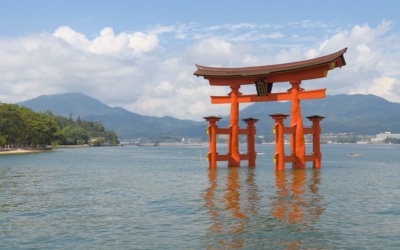
Key routes that travelers frequently use include the Niigata to Sado Island run, where the fastest boat takes as little as 67 minutes from Niigata Port,[2] the short hop from Hiroshima's Miyajimaguchi to Miyajima Island, and the network crisscrossing the Seto Inland Sea.
The Seto Inland Sea is arguably the heart of Japanese ferry culture. Naoshima, famous for its contemporary art installations, can be reached from Uno in about 20 minutes by ferry for 370 yen one way, or from Takamatsu in about 50 to 60 minutes by ferry for 680 yen one way.[3] These short hops function like floating bus routes for locals and are a highlight for island-hopping travelers.
While the network is vast, some routes operate only once or twice daily, and smaller island services may be seasonal or weather-dependent. The most remote islands, the Ogasawara chain (Bonin Islands), are reached by the Ogasawara Maru from Tokyo's Takeshiba Pier, a 24-hour voyage with a sailing almost once a week.[4]
Classes and Comfort Levels
Long-distance Japanese ferries offer a range of accommodation classes. The exact names and layouts differ by operator, so check the company's cabin descriptions when you book. The most common tiers are:
- Second class (2-tou): The most affordable option, typically a large open tatami room where passengers lay out futons side by side. It is communal and basic. Blankets and pillows are usually provided.
- Second class with a designated space: Similar to standard second class but with an assigned space, sometimes with a partition or bunk-style sleeping shelf for more privacy.
- First class (1-tou): Private or semi-private cabins with beds, often for two to four passengers.
- Special class or suite (tokutou): The premium tier, offering private cabins with en-suite facilities on larger overnight ferries.
For budget travelers, the open tatami rooms are a quintessentially Japanese experience and represent good value, especially on overnight routes where the ferry doubles as accommodation. Families and couples seeking privacy will find the private cabins worth the upgrade. On shorter Seto Inland Sea crossings, most ferries offer only standard open seating or deck space.
A feature of some Japanese overnight ferries is an onboard public bath (ofuro). Check the operator's ship description if this matters to you.
Booking and Tickets
Booking methods vary by operator. Many larger companies offer online reservations through their own websites, though these are sometimes only in Japanese. Third-party platforms and travel agencies can help bridge the language gap: GoAsia.cc lets you compare ferry routes and book tickets in English, which is especially useful for long-distance overnight crossings.
For shorter island-hopping routes in the Seto Inland Sea or to popular destinations like Miyajima, walk-up tickets bought at the port terminal are the norm. The Miyajima ferry run by JR West costs 160 yen one way for an adult (320 yen round trip), and it is covered by the Japan Rail Pass and the JR-WEST Rail Pass.[5] Longer overnight routes, particularly during summer and holiday periods such as Golden Week, Obon, and New Year, should be booked well in advance because cabins can sell out.
Payment methods differ by operator and terminal. Carry some cash for small ports, and check the operator's website for the payment options of larger operators.
What to Expect on Board
The onboard experience on a Japanese ferry is a world apart from ferry travel in many other countries. Cleanliness is high, even in the most basic second-class areas, and crew members are attentive and courteous.
Overnight ferries typically have a restaurant or cafeteria, and vending machines are common. On shorter crossings, food options are limited, so packing a convenience store bento from the port area is a smart move.
Luggage is self-managed on most ferries. You carry your bags to your cabin or tatami space. Vehicles are carried on the long-distance ferries,[1] making ferries a practical choice for road-trippers exploring rural Japan; check the operator's rules and fees for cars, motorcycles, and bicycles.
Scenery is a major draw. The Seto Inland Sea routes pass through island-dotted waters, the Pacific routes offer vast open ocean, and the Sea of Japan crossings can be dramatic, especially at sunset.
Wi-Fi and phone signal are not reliable on every vessel or route. Bring a book, download entertainment in advance, or simply enjoy the meditative pace.
Etiquette mirrors general Japanese customs: remove shoes when entering tatami areas, keep noise to a minimum (especially at night in shared rooms), and follow bathing rules in the onboard ofuro, washing thoroughly before entering the communal tub.
Tips for Ferry Travel in Japan
- Book early for holiday periods. Golden Week, Obon, and the New Year period see strong domestic travel demand. Ferries sell out, especially private cabins and vehicle spaces.
- Bring slippers and layers. Tatami rooms and corridors are shoe-free zones. Air conditioning on ferries can run cold, so a light jacket or hoodie is useful even in summer.
- Stock up at the konbini. Convenience stores near ferry terminals are good for grabbing bento, onigiri, snacks, and drinks before boarding.
- Check weather and cancellations. Typhoon season can disrupt services, particularly to Okinawa and the smaller island chains. Operators post cancellation notices on their websites, usually in Japanese, so a translation app helps.
- Use ferries strategically with rail passes. The JR Miyajima ferry is covered by the Japan Rail Pass.[5] Combining ferries with rail travel opens up itineraries that pure train routes cannot match.
- Language barriers are manageable. Port terminals usually have some English signage, and boarding procedures are straightforward. Having your destination written in Japanese on your phone helps at ticket counters.
- Do not skip the onboard bath. If your ferry has an ofuro, use it. Watching the sea from a hot bath is one of Japan's most underrated travel experiences.