Plan your Japan train adventure with our guide to the shinkansen network, ticket classes, rail passes, booking tips, and onboard etiquette across Japan.
Few experiences in travel match the quiet thrill of standing on a Japanese train platform as a shinkansen glides in with surgical precision, stopping so that its doors align perfectly with the markings on the ground. Japan's railways are not merely a way to get around: they are a national institution, a source of deep cultural pride, and arguably the finest rail system ever built. From the neon-lit mega-stations of Tokyo to rural single-track lines winding through cedar forests, trains define the rhythm of Japanese life.
The Train Network in Japan
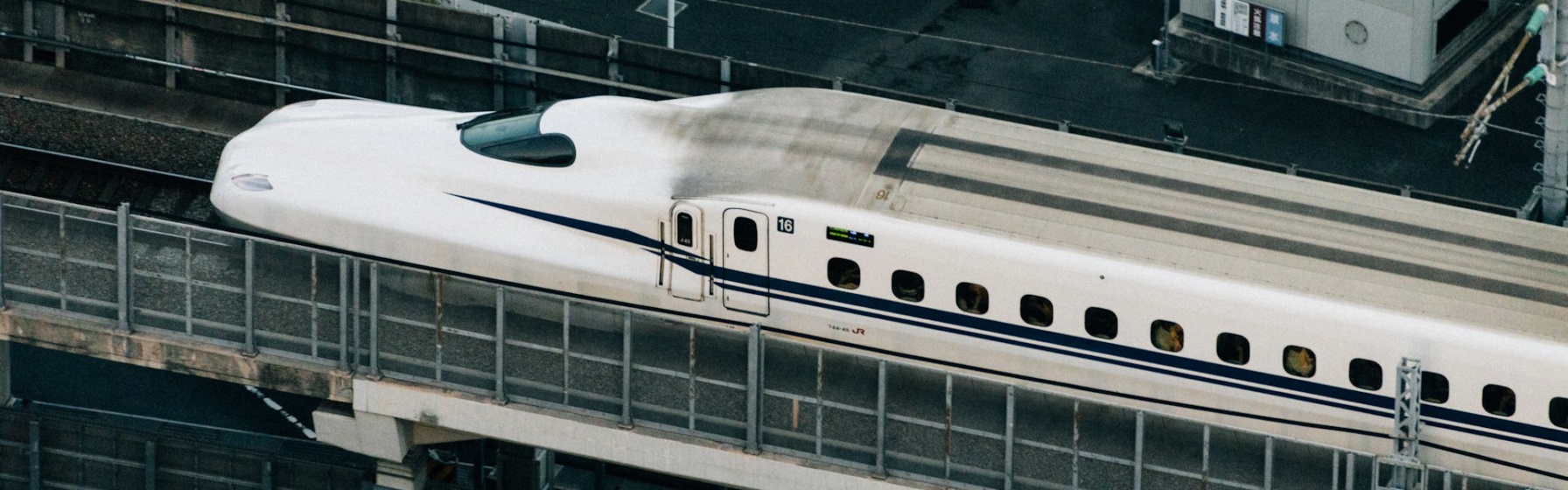
Japan's rail network is staggeringly comprehensive. The backbone is the shinkansen (bullet train) system, which connects major cities along several high-speed corridors. The Tokaido Shinkansen links Tokyo, Nagoya, Kyoto, and Osaka, the most heavily traveled route in the country, and runs at a maximum speed of 285 km/h, with the fastest trains taking 2 hours 21 minutes from Tokyo to Shin-Osaka.[1] Other shinkansen lines extend north to Hokkaido (via the Tohoku and Hokkaido Shinkansen), west to Hiroshima and Fukuoka (Sanyo Shinkansen), and into the mountainous interior via the Hokuriku and Joetsu lines. For many city pairs, the bullet train is competitive with flying once you factor in airport transit and check-in times.
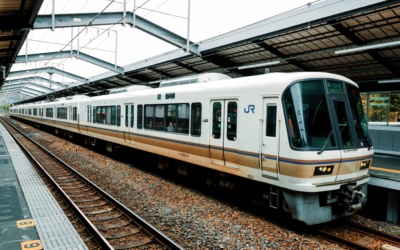
Beyond the shinkansen, an enormous web of conventional JR (Japan Railways) lines, private railways, and subway systems blankets the country. The JR Group is made up of six companies and its lines total over 19,000 km, covering most intercity and rural routes.[2] Private railways serve specific regions and cities, and major cities such as Tokyo, Osaka, Nagoya, Sapporo, and Fukuoka have dense subway and commuter rail networks that make car ownership almost unnecessary. Even remote corners of Shikoku and northern Tohoku have rail service, though frequencies thin out considerably.
Classes and Comfort Levels
Shinkansen trains typically offer an ordinary class and a Green Car. Ordinary class (jiyuseki for unreserved, shiteiseki for reserved) provides generous legroom, reclining seats, and a very quiet ride. Green Car is the equivalent of business class, with wider seats, extra legroom, and a noticeably quieter atmosphere. GranClass, the top class, is offered only on JR East's Tohoku and Hokkaido Shinkansen (series E5 and H5), the Hokuriku Shinkansen (E7 and W7), and the Joetsu Shinkansen (E7); the cabin seats just 18 passengers.[3] There is no GranClass on the Tokaido and Sanyo lines.
On conventional limited express trains (tokkyu) you will find ordinary and Green Car options as well. For budget-conscious travelers, local and rapid trains on JR and private lines have no class distinction, and the ride is perfectly comfortable for shorter journeys.
The Japan Rail Pass covers ordinary cars on all JR shinkansen, limited express, express, and local trains (a Green Pass covers Green Cars), but not the Nozomi and Mizuho shinkansen, which require an extra special ticket sold only to pass holders.[4] The pass is not valid on highway buses run by the JR Group.[4]
Booking and Tickets
Purchasing train tickets in Japan is straightforward but varies by train type. For local and rapid trains, simply tap an IC card (Suica, Pasmo, ICOCA, or similar) at the gate, with no advance booking needed. Suica and Pasmo are accepted in the Tokyo area, and the IC cards of other regions work together under the nationwide mutual-use scheme, though a trip that starts in one card area must end in that area.[5] Limited express and Green Car travel needs an additional ticket bought in advance.[5]
Shinkansen and limited express tickets can be purchased at JR ticket counters (Midori-no-madoguchi), at ticket machines in stations, or online. The SmartEX service lets you book Tokaido, Sanyo, and Kyushu Shinkansen seats online after registering as a member with a credit card.[6] Reservations can be made up to one year ahead, and a QR ticket lets you go straight to the ticket gate.[7]
The Japan Rail Pass can be bought on the official website, which also allows seat reservations in advance, and the exchange order is turned in at a JR exchange location to receive the pass.[2] Regional passes such as the JR-WEST RAIL PASS cover only that company's area, but for products that include the Sanyo Shinkansen, Nozomi and Mizuho can be used.[7] Platforms like GoAsia.cc let you compare pass options and route combinations before committing.
Advance booking is recommended for peak travel periods such as Golden Week, Obon, and New Year. In the peak periods announced each year, all seats on Nozomi trains on the Tokaido and Sanyo Shinkansen are reserved seats, and non-reserved cars on the other trains can be crowded.[7] Outside these windows you can usually find a seat without booking far ahead.
What to Expect on Board
Riding a Japanese train is an exercise in quiet efficiency. On the Tokaido Shinkansen the average delay per train was 1.6 minutes in fiscal 2023, including delays caused by natural disasters.[1]
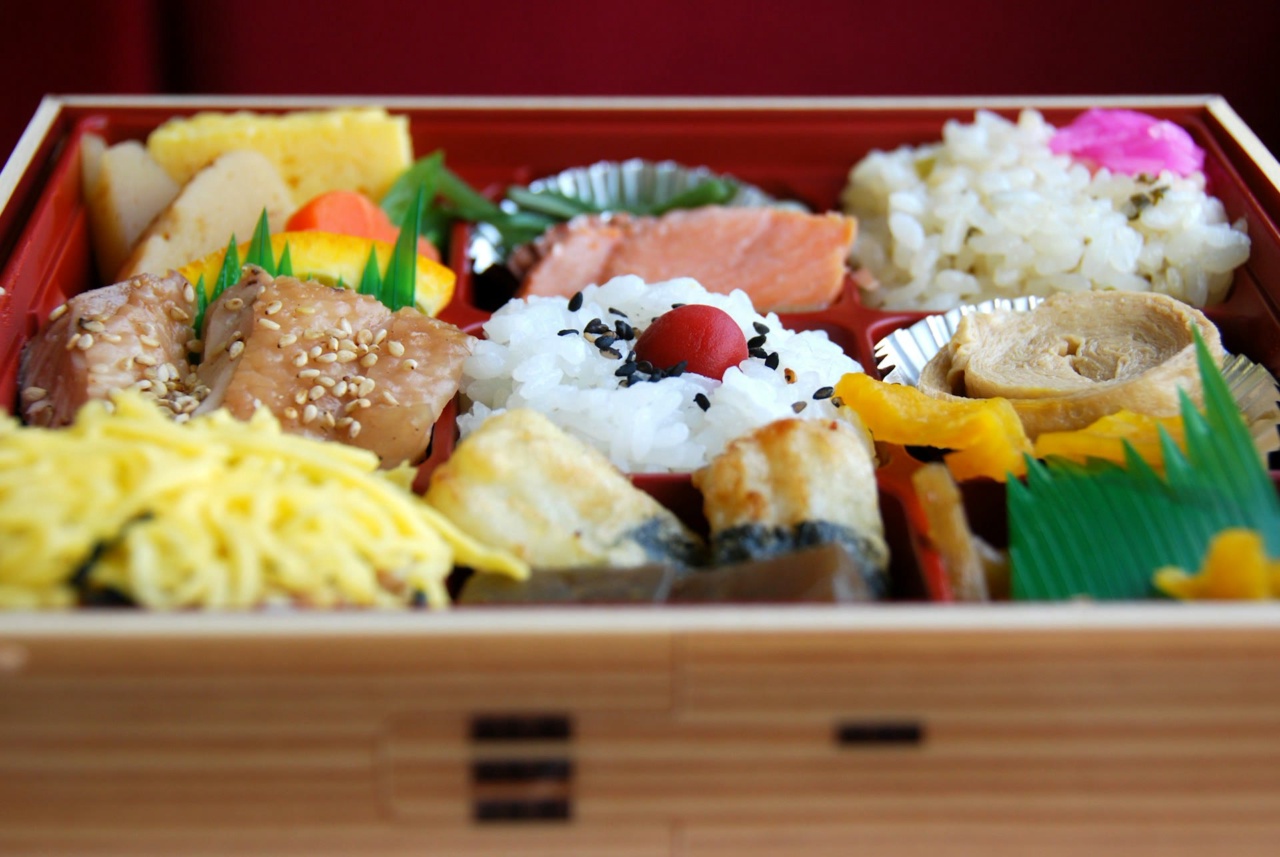
One of the great pleasures of rail travel is the ekiben, the beautifully packaged station bento boxes sold at stations. Each region has its own specialties. Buy yours at the station before boarding rather than counting on on-board sales.
On the Tokaido, Sanyo, Kyushu, and Nishi-Kyushu Shinkansen, baggage with total dimensions (length + width + height) of up to 160 cm goes at your feet, on the overhead racks, or in the storage area on the deck. Baggage between 161 and 250 cm must be stored behind a seat with an oversized baggage area, which has to be reserved with the ticket at no extra charge. Without a reservation, a carry-on fee of 1,000 yen applies.[8]
Japanese train etiquette is important. Phone calls are not made in the passenger cabin: step to the vestibule area between cars. Speaking in hushed tones is the norm. Eating is acceptable on long-distance trains but generally frowned upon on commuter services. Priority seating for elderly, pregnant, and disabled passengers is clearly marked and should always be respected.
Tips for Train Travel in Japan
Get an IC card early: A Welcome Suica card is aimed at short visits and can be used for 28 days from the date of purchase. It can be used on trains and buses, at vending machines, for coin lockers, and in convenience stores.[5]
Do the math on rail passes: The Japan Rail Pass is excellent value if you are covering long distances, but for travelers staying within one city or region, a local pass or pay-as-you-go may be cheaper.
Mind the train types: Not all trains stop at all stations. On the same line, you might see local (kakueki), rapid (kaisoku), express (kyuko), and limited express (tokkyu) services. Board the wrong one and you could sail past your stop. Check the stopping pattern on platform displays.
Avoid rush hour in cities: Morning rush hour in Tokyo is very crowded. If possible, travel outside the peak and keep luggage small.
Consider sending luggage ahead: JR Central points travelers to the LUGGAGE EXPRESS service, which delivers baggage from a hotel or station to the destination hotel on the same day.[8]
Embrace rural lines: Some of Japan's most memorable rail experiences are on slow, scenic regional routes. Check the timetable first, because frequencies can be low.
Sources and background
Numbers in the text such as [1] refer to these sources.
[1]Central Japan Railway Company (JR Central): About the Shinkansen. Retrieved October 19, 2026.
[2]Japan Rail Pass (JR Group): JAPAN RAIL PASS. Retrieved October 19, 2026.
[3]East Japan Railway Company (JR East): GranClass. Retrieved October 19, 2026.