
Contents
- 1. Getting Around Busan by Subway
- 1.1 Donghae Line
- 2. Getting Around Busan by Bus
- 3. Getting Around Busan by Taxi
- 4. Getting Around Busan by Ride-Hailing
- 5. Getting Around Busan by Ferry
- 6. Getting Around Busan on Foot
- 7. Comparing Your Options
- 8. Practical Tips for Getting Around Busan
- 9. Popular Routes and Destinations
- 10. Frequently Asked Questions
- 11. Sources and background
Busan unfolds along the southeastern coast of South Korea in a tangle of mountains, beaches and harbor districts, and that geography shapes everything about how you move through it. Unlike Seoul's flat grid, Busan climbs steep hillsides, dives into tunnels and wraps around bays, so a route that looks short on a map can involve a surprising amount of up and down. The good news is that the city has invested heavily in clean, English-friendly public transport that handles most of the climbing for you.
The backbone of daily life here is the subway, supplemented by an extensive bus network, cheap and plentiful taxis, and a few quirks you will not find elsewhere in Korea, like the seaside Donghae Line and the ferries crisscrossing the harbor. Most signage carries English, station announcements are bilingual, and a single rechargeable card pays for nearly everything.
Step out of your hotel in Seomyeon or Haeundae and you will notice the rhythm: orderly subway crowds, taxis idling at every corner, and locals tapping transit cards without breaking stride. Once you understand the basics, getting from any point A to any point B in Busan is genuinely easy and rarely expensive.
Getting Around Busan by Subway
The Busan Metro is the fastest, most reliable way to cover distance across the city. It runs four numbered lines, and the Busan-Gimhae Light Rail Transit and the Donghae Line extend the network.[1] The lines link the major hubs of Seomyeon, Nampo-dong, Haeundae, the train stations and the airport approaches. Line 2 is the workhorse for visitors, running along the coast from the western districts out to Haeundae and Jangsan.
The metro runs from 05:00 to 23:59, and first and last trains vary by station.[2] Announcements are made in Korean, English, Japanese and Chinese.[1] Stations are numbered as well as named, so even if you cannot read Hangul you can navigate by following station numbers. Signage is bilingual, and the network is clean and well maintained.
A single ride costs 1,600 won with a transit card in the first fare zone and 1,800 won in the second. A single-use QR ticket from a station machine costs 100 won more.[3] The card is cheaper and far more convenient. Avoid the weekday morning and evening rush on Line 1 and Line 2 if you can, as carriages get packed near Seomyeon, the city's busiest interchange.
Donghae Line
The Donghae Line is a Korail commuter line along the eastern coast, with stops at Songjeong and Osiria.[1] It takes the same transit card: the fare is 1,300 won within 10 km, plus 200 won for each further 10 km.[1] It is a relaxed, above-ground alternative to the subway, with sea views on parts of the journey.
Getting Around Busan by Bus
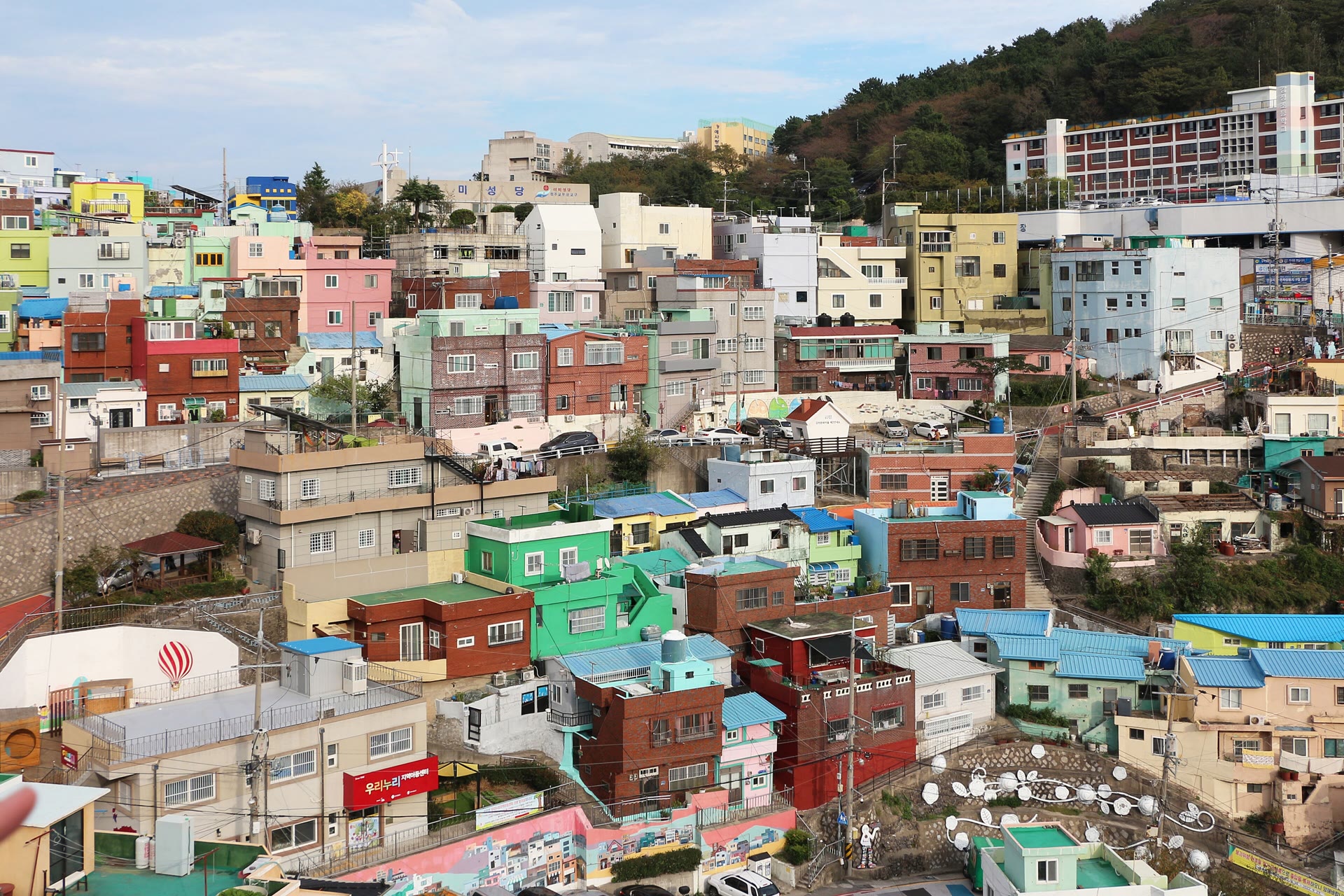
Buses reach the corners of Busan that the subway misses, including hillside neighborhoods like Gamcheon Culture Village and beachside stretches between subway stations. Regular city buses, city buses with guaranteed seats, express city buses and shuttle buses all run here.[2] The small Maeul (village) minibuses climb the steep lanes where full-size buses cannot go.
A city bus fare is 1,550 won with a transit card and 1,700 won in cash.[1] Transfers between buses and the subway within 30 minutes get a discount if you pay by card and tap the reader again on your way out.[2] Cash fares get no transfer discount, and the driver may not have change.
Buses are comfortable but can be intimidating for first-timers because route information at stops is mostly in Korean and Busan drivers are famously brisk. Use a mapping app to know exactly which bus number and stop you need, and press the stop button well before your destination. The Maeul minibuses are essential for reaching Gamcheon Culture Village from Toseong Station.
Getting Around Busan by Taxi
Taxis are abundant, metered and reasonably priced, making them a practical choice for short hops, late nights or hauling luggage up hills. Standard taxis start at 4,800 won for the first 2 km, then the meter adds 100 won per 132 meters, or per 33 seconds in slow traffic. Black deluxe taxis start at 7,500 won for the first 3 km and offer more space.[1]
Drivers generally use the meter without prompting, and tipping is not expected. Late-night surcharges apply: 20 percent from 23:00 to midnight, 30 percent from midnight to 02:00 and 20 percent from 02:00 to 04:00.[1] Most drivers speak little English, so it pays enormously to have your destination written in Korean or a pin dropped on a map to show them. Traffic through the Seomyeon and Nampo areas can crawl at peak times, so the subway often beats a taxi across town despite the convenience.
Getting Around Busan by Ride-Hailing
Korea's dominant ride-hailing app is Kakao T, and it is the single most useful tool a visitor can have in Busan. It calls regular metered taxis to your exact location, shows the driver your destination, and lets you pay by registered card so there is no language fumbling or cash needed.
Fares follow the taxi meter, so you are not paying a premium compared to flagging one down. You can compare ride-hailing against other options on GoAsia.cc to see when it makes sense. The app interface is available in English, and it removes almost all of the friction that the language barrier otherwise creates with drivers.
Getting Around Busan by Ferry
Busan is a port city, but ferries play a small role for visitors. Car ferries and high-speed vessels to Tsushima, Osaka, Shimonoseki and Fukuoka in Japan leave from the Busan Port International Passenger Terminal.[1]
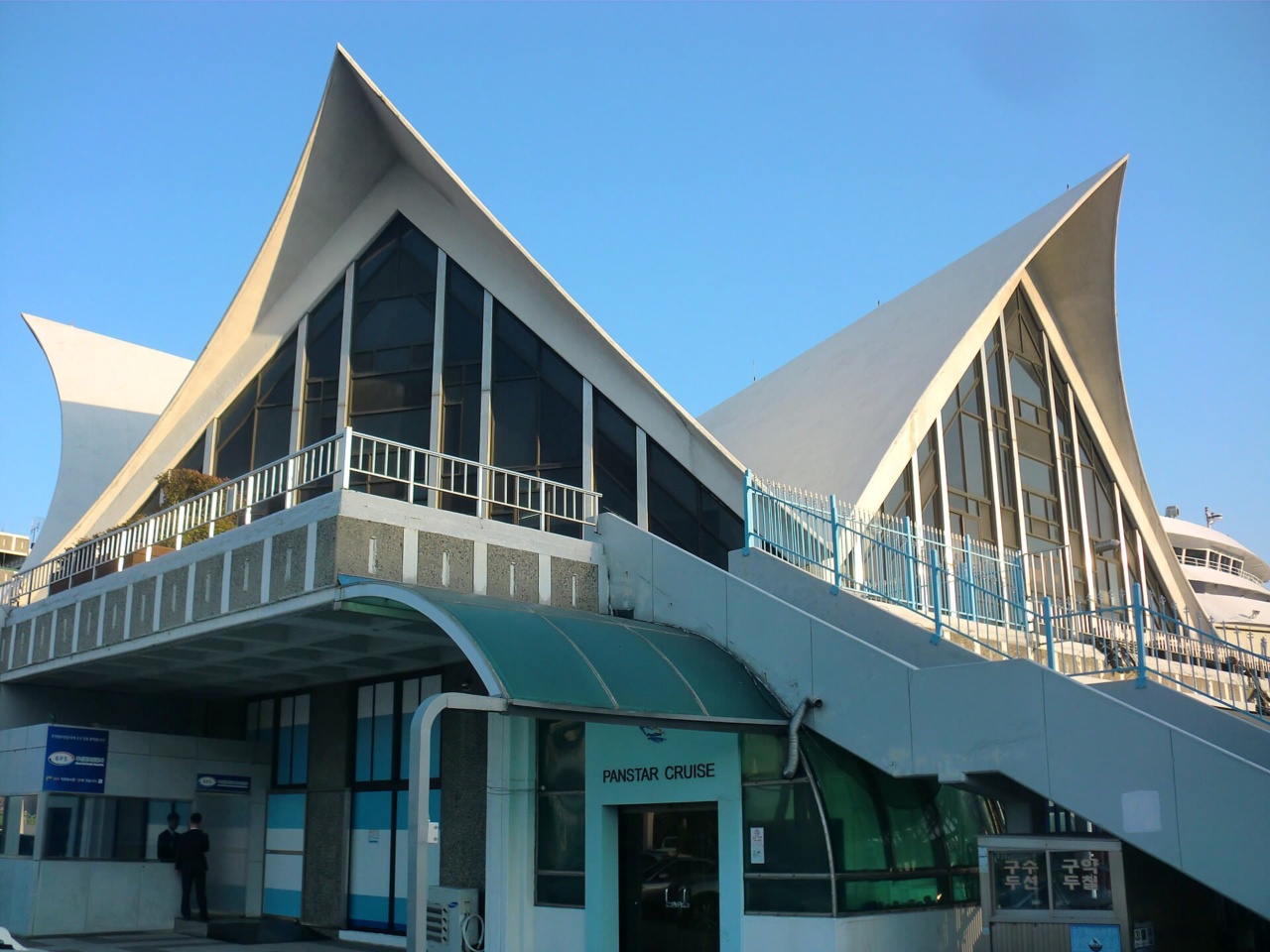
For everyday movement you will rarely need a ferry.
Getting Around Busan on Foot
Certain districts beg to be explored on foot. Nampo-dong, the Jagalchi fish market, Gukje Market and the BIFF Square are best wandered, and Haeundae Beach and the surrounding promenade are wonderfully walkable. The catch is Busan's hills: Gamcheon Culture Village and many residential neighborhoods involve steep staircases and inclines that will test your calves.
The city is generally very safe to walk at any hour, with low crime and well-lit main streets. Just be prepared for elevation changes and wear comfortable shoes.
Comparing Your Options
| Mode | Typical Cost | Duration | Best For |
|---|---|---|---|
| Subway | Around 1,600-1,800 won[3] | Fast, no traffic | Crossing the city quickly |
| Bus | Around 1,550 won[1] | Moderate, traffic-dependent | Hillside areas the subway misses |
| Taxi | From 4,800 won[1] | Fast off-peak, slow at rush hour | Short hops, luggage, late nights |
| Kakao T ride-hailing | Taxi meter | Same as taxi | Avoiding the language barrier |
| Ferry | Varies by route | Slower | Trips to Japan |
| Walking | Free | Slow on hills | Exploring markets and beaches |
Practical Tips for Getting Around Busan
A few habits will make your time in Busan far smoother. The first is to get a transit card on arrival.
- Buy a T-money or Cashbee card at a convenience store, load it with cash, and use it for the subway, buses, the Donghae Line, taxis and even small purchases. The card itself costs 3,000 to 5,000 won.[4] It saves money and spares you fumbling for coins.
- Download the right apps. Kakao T for taxis, Kakao Map or Naver Map for navigation (Google Maps is unreliable for walking and transit directions in Korea), and a translation app like Papago for talking to drivers and reading menus.
- Carry your destination in Korean. A screenshot of the name in Hangul or a dropped map pin works far better than trying to pronounce it for a taxi driver.
- Avoid rush hour on Line 1 and Line 2. Seomyeon is genuinely crowded during the weekday morning and evening commute.
- Keep small cash for buses if you ever ride without a card, though the card is always better since drivers may not make change.
Scams are rare in Busan. Metered taxis are honest as a rule and drivers do not expect tips, so if a driver refuses the meter or quotes a flat fare, simply use Kakao T instead. Late-night travel is safe, with the subway running until around midnight and taxis plentiful afterward, though the late-night surcharge applies. The biggest mistake visitors make is underestimating the hills and the heat in summer, so plan routes that lean on the subway and let it do the climbing for you.
Popular Routes and Destinations
The most common journey for arriving travelers is the transfer between Gimhae International Airport and the city center. The airport lies about an hour from downtown.[2] The Busan-Gimhae Light Rail Transit connects to the subway at Sasang Station (Line 2) and Daejeo Station (Line 3) and is the cheapest way in,[5] with a fare of 1,300 or 1,500 won.[6] A taxi or Kakao T ride is a comfortable alternative with luggage, and the airport limousine bus runs to Haeundae in about an hour.[2]
For sightseeing, the subway plus a short Maeul minibus is the standard way to reach Gamcheon Culture Village, while the Donghae Line is the scenic route toward Songjeong and the eastern coast. Haeundae Beach sits right on Line 2, and Nampo-dong with Jagalchi Market is easily reached on Line 1.
Frequently Asked Questions
Use this guide to compare local transport in Busan. When bookable tickets are available, the booking tool shows current options and prices.
The subway is the best all-round option, as it is fast, cheap, English-friendly and avoids the city's notorious traffic and steep hills. Pair it with the Kakao T app for taxis when you need to reach spots the subway does not cover, and a transit card handles payment for almost everything.
A single subway ride costs 1,600 to 1,800 won with a transit card and a city bus fare is 1,550 won, with a transfer discount between them. Taxis start at 4,800 won, making them affordable for short trips, and ride-hailing through Kakao T follows the taxi meter.
Yes, Busan is very safe and its public transport is clean, orderly and reliable at all hours. The subway runs until around midnight and taxis are plentiful afterward, with low crime even late at night, though late-night surcharges of 20 to 30 percent apply on taxis between 23:00 and 04:00.
Yes, Kakao T is the dominant app and it is the easiest way for visitors to get a taxi, since it shows the driver your destination and lets you pay by registered card. Locals rely on it too.
A T-money or Cashbee card is highly recommended. You can buy and recharge one at any convenience store or subway machine, and it works on the subway, all buses and the Donghae Line, gives you transfer discounts and even pays for snacks at convenience stores.
Districts like Nampo-dong, Jagalchi Market and the Haeundae beachfront are very walkable and pleasant on foot. However, Busan is built on steep hills, so many neighborhoods involve significant climbing, and it is best to use the subway to cover distance and save your legs.
The airport is about an hour from downtown. Budget travelers can use the Busan-Gimhae Light Rail Transit, which links to the subway at Sasang Station (Line 2) or Daejeo Station (Line 3) for 1,300 to 1,500 won, while a taxi or Kakao T ride is a comfortable choice with luggage.
Sources and background
Numbers in the text such as [1] refer to these sources.
- [1] Busan Metropolitan City: Public Transportation. Retrieved October 20, 2026.
- [2] Visit Busan, Busan Metropolitan City: Preparing for a Trip: Transportation. Retrieved October 20, 2026.
- [3] Busan Metropolitan City: Urban rail fares (Korean). Retrieved October 20, 2026.
- [4] Korea Tourism Organization: Transportation Cards. Retrieved October 19, 2026.
- [5] Korea Airports Corporation, Gimhae International Airport: Public transportation: subway. Retrieved October 16, 2026.
- [6] Busan Transportation Corporation: Busan Gimhae light rail transit: operation plan and fares. Retrieved October 16, 2026.
Guide prices and journey times are indicative, not live quotes. A booked package may include transfers and waiting time as well as the main journey. Check the selected offer, pickup point and current conditions before booking.