Dali Old Town: Walking Routes, Bai Culture and Transfers
Contents
- 1. The history behind today's old town
- 2. A walking route through the street grid
- 3. Bai food, tea and tie-dye
- 4. Where to stay and how long to allow
- 5. Opening listings and separate attraction tickets
- 6. Choosing a mountain or lake day
- 7. Arriving by train, plane or coach
- 8. Weather and practical preparation
- 9. Sources and background
- 10. Frequently Asked Questions
Dali Old Town is a useful base for combining Bai culture and a street walk with Cangshan to the west and Erhai Lake to the east. Start with the South Gate and Fuxing Road, then leave the main shopping streets for smaller lanes. As a planning suggestion, allow three or four nights if you want separate mountain and lake days; a shorter stay can focus on the town. The railway station and airport are different arrival points, neither inside the old town, and a lakeside room is not automatically within walking distance of the old town's restaurants and cafés.
The history behind today's old town
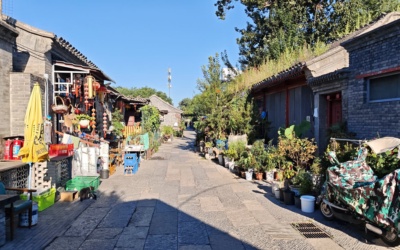
The region's earlier history belongs to the Nanzhao and Dali kingdoms. The present old town was built in 1382, during the Ming dynasty, according to Dali Travel Group. Its street grid, stone paving, white walls and tiled courtyard houses provide a framework for understanding the Bai architectural setting.
Restoration is part of that story. The operator records the rebuilding of the South Gate in 1982, so a historic-looking gate is not proof that every visible component is medieval. The former Du Wenxiu headquarters now houses the Dali Municipal Museum, while Jiang Gong Ci is associated with the intangible cultural heritage museum. These offer different historical and cultural angles; check their current exhibitions, admission arrangements and hours before making either an essential stop.
Things to Do
Offers are only loaded from GetYourGuide after you click. GetYourGuide can then process your IP address and set cookies. Privacy Policy
GetYourGuide partner offers. GoAsia may earn a commission if you book through these offers. Check whether tickets or transfers are included, and follow the attraction's official booking and admission rules.
A walking route through the street grid
Use the South Gate, Nanmen, as a starting landmark. Fuxing Road runs north to south between the gates; the operator gives its length as about 1.5 kilometres. Follow part of it for orientation, then turn into the public lanes. Build a walk around your own starting point and intended stops, and check locally if you want access to a tower or wall.
Renmin Road runs east to west, while Huguo Road is also known as Yangren Jie or Foreigner Street. Honglong Jing adds a water-lined street to the walk. Combining these distinct landmarks gives you a manageable route through the grid without needing to treat every shop as a sightseeing stop.
Allow time for a meal or café break, and look at courtyard entrances, roofs and decorative details as well as the shop fronts. Smaller lanes are worth exploring, but quietness is not guaranteed and a residential courtyard is not automatically public. Ask before entering or photographing private interiors. Return to the main route whenever a lane is closed or access is unclear.
Bai food, tea and tie-dye
Rushan is a useful food to recognise: this fan-shaped Bai dairy speciality is made with fresh cow's milk and acidified liquid. Xinhua's report from Eryuan describes several preparations, including grilling and frying. Ask how the version on a particular menu is served, and try a preparation that appeals to you.
Bai three-course tea is a hospitality tradition. Yunnan's Agriculture and Rural Affairs Department explains the sequence as bitter tea, sweet tea and a final cup for reflection or lingering flavour, linked to experiences in life. If you want a demonstration, confirm its location, timing and charge with the venue before planning your day around it.
For textiles, Zhoucheng is a documented centre of Bai tie-dye. The national intangible heritage register describes tying or stitching patterns in cloth before dyeing, traditionally with plant indigo. A village visit or workshop can add context beyond shopping. Confirm the workshop booking and ask about the actual process and materials, since products need not all use the same traditional methods.
Where to stay and how long to allow
Choose an old-town address if your priority is reaching the walking route and restaurants on foot. Check the exact map pin, the nearest practical pickup point and the final walk with luggage. A quieter side-street room is an option to investigate, not a promise that the whole district is silent. Ask about late arrivals and noise before booking.
Choose a lake-area address if spending time at that stretch of shore is your priority. Compare its transfer to the old town and to your arrival station or airport before paying; a property marketed as being in Dali need not be in Dali Gucheng. For a short visit, one base may save repeated luggage moves. With three or four nights, you can allow separate time for the town, mountain and lake.
Opening listings and separate attraction tickets
Plan the old-town street walk separately from visits to museums, towers and temples. Dali Travel Group lists the district as open all day, 24 hours, on a page whose content dates from 2019 to 2020. That district-level listing is not an opening schedule for individual attractions. Cangshan cableways, the Three Pagodas and lake cruises have their own admission and booking arrangements. Check the selected venue or operator's current price, operating status and final admission time when arranging each outing.
Choosing a mountain or lake day
Cangshan has nineteen peaks and eighteen streams. The regional tourism overview describes the paved Cloud Traveler's Path, also called Jade-Cloud Road, along the mountainside at about 2,600 metres. This is not a summit-ridge traverse, and a cableway to a higher destination is not automatically the correct lift for your chosen walk. Select the trail section, upward and return cableways together, and check opening notices and weather before setting out. Bring a warm layer and shoes suitable for steps.
For Erhai, choose one shore section that fits the day you want. China Tourism Group describes a managed 46-kilometre western section within a wider 129-kilometre ecological restoration project; other sections mainly receive greenery maintenance. The project length is not a continuously open sightseeing route. Within the managed corridor, the operator describes designated sightseeing vehicles, shared bicycles and electrically assisted cycles. Choose the transport permitted at your selected entrance, and confirm the route and return point before hiring equipment.
The Three Pagodas of Chongsheng Temple are a separate cultural outing near the old town. Their operator explains that the historic temple fell into ruin by the late Qing period while the three pagodas survived. Distinguish the surviving pagodas from the wider temple complex when thinking about its history.
| Suggested outing | What to decide first | Suggested time allowance |
|---|---|---|
| Old-town street walk | South Gate, Fuxing, Renmin, Huguo and smaller public lanes | Half a day, with longer meal or museum stops if wanted |
| Cangshan | Chosen trail section, suitable cableway and return opening | Reserve a separate day rather than promise a fixed journey time |
| Erhai western corridor | Entrance, permitted bicycle or operator vehicle and return point | Half a day or a day for one selected section |
| Three Pagodas or Zhoucheng | Individual attraction or workshop booking and transport | A separate half-day or day according to your chosen visit |
Arriving by train, plane or coach
Book rail travel to the station named on your ticket, commonly Dali Station (大理站), and set your onward destination to Dali Old Town (大理古城). The operator's 2020 transport guide locates the railway arrival in the southern urban area traditionally described as Xiaguan, with a separate transfer to the old town. Use that as geographic orientation and your current rail booking for service details. Confirm your actual station exit, bus boarding point or taxi pickup with the accommodation, and leave time for the final transfer.
For a flight arrival, use Dali Fengyi Airport (大理凤仪机场) as the starting point. China Southern Airlines' airport guide lists a bus towards the old town and directs passengers to the official Dali Airport account for departure information; it places the taxi pickup outside the arrivals hall. Check service for your actual arrival time, the bus drop-off and the final leg to the room. For a road transfer, request a quote using your accommodation's exact map pin.
For a coach, use the exact departure and arrival terminal printed on the booking. Dali has multiple bus terminals in the operator's guide, so confirm which one your service uses and its onward connection to your room. Check the date-specific service, fare and return journey before arranging a village excursion or onward trip, including any proposed journey to Shaxi.
Weather and practical preparation
Choose the mountain day using the forecast and the selected cableway's notice, not a guarantee of clear skies in a particular month. Keep a town walk, food stop or museum option for a day when conditions are unsuitable for the planned mountain route. Check actual holiday dates and accommodation availability when choosing your travel dates; neither an empty street nor a quiet lake shore is assured.
Save the accommodation name and destination in Chinese, download a map and arrange a working data and payment option before arrival. Check accepted payment methods for your own bookings. For bicycle hire, inspect the equipment, follow local route signs and agree on the return point. If you want to visit a market, ask about its actual date and location before building it into the itinerary.
For a longer Yunnan trip, use the Erhai Lake guide to choose a shore outing and the Lijiang Old Town guide to compare your next stay. If adding Tiger Leaping Gorge, plan it as a separate journey with its own transport and walking requirements. Allocate days by those activities rather than assuming Dali is always quieter than Lijiang.
Sources and background
These sources support the topics listed below, not every statement or current price in this article.
- [1] Dali Travel Group: Dali Old Town: Ming layout, rebuilt gates, streets and cultural museums. Retrieved October 5, 2026. History, Culture
- [2] Dali Travel Group: Three Pagodas of Chongsheng Temple: surviving pagodas and temple history. Retrieved October 5, 2026. History, Culture
- [3] China Southern Airlines: Dali Airport: old-town bus information channel and arrivals taxi pickup. Retrieved October 5, 2026. Transport
- [4] China Tourism Group: Erhai ecological corridor: managed western section and designated transport. Retrieved October 5, 2026. Access, Transport
- [5] Yunnan Department of Agriculture and Rural Affairs: Bai three-course tea: hospitality tradition and cultural interpretation. Retrieved October 5, 2026. Culture
- [6] Visit Yunnan: Mount Cangshan: mountain geography and Cloud Traveler path context. Retrieved October 5, 2026. Culture, Access
- [7] Dali Travel Group: Dali transport guide from2020: railway and separate transfer geography. Retrieved October 5, 2026. Transport
- [8] China Intangible Cultural Heritage Protection Centre: Bai tie-dye: national heritage register and Zhoucheng craft techniques. Retrieved October 5, 2026. Culture
- [9] Xinhua News Agency: Rushan in Eryuan: original field report on cow-milk production and preparations. Retrieved October 5, 2026. Culture
Frequently Asked Questions
Three or four nights are a suggested allowance for a town walk plus separate Cangshan and Erhai days. A shorter stay can focus on the town and one outing. This is planning advice, not a required sightseeing duration.
Plan the street walk separately from individual museums, the Three Pagodas, cableways and cruises. Check each venue's admission or booking arrangements and price for the outing you select.
No. The dated tourism portal lists the old-town district as all-day, but that does not establish current hours for museums, towers, temples, cableways or every street. Check each intended stop separately.
Set the destination to 大理古城 and confirm the current bus boarding point or taxi pickup from your actual station exit. The station is not inside the old town. Include the transfer and final luggage walk in your arrival plan.
Start from Dali Fengyi Airport. China Southern lists an old-town bus with departures to check through the official Dali Airport account, plus taxis outside arrivals. Confirm the drop-off and last leg to your accommodation.
Check access before renting. The managed western ecological corridor has designated transport options; choose a permitted bicycle or operator vehicle for your entrance and route. Its paths are different from public roads and the wider restoration project.
Choose an old-town address for the street walk and town meals, or a lake-area address for time at that shore. Compare exact map pins, arrival transfers, pickup points and room noise before booking.
Choose dates around the activities you want, then check the forecast and current access or cableway notices. No month guarantees clear mountain views or low crowds. Keep a town-based alternative if your outdoor plan becomes unsuitable.