Varanasi Ghats and Ganga Aarti: Visitor Guide
Contents
- 1. Understanding the Ghats
- 2. Key Ghats to Visit
- 2.1 Dashashwamedh Ghat
- 2.2 Manikarnika Ghat
- 2.3 Assi Ghat
- 2.4 Man Mandir Ghat
- 2.5 Kedar Ghat
- 3. The Ganga Aarti Ceremony
- 3.1 What to Expect
- 3.2 Where to Watch
- 4. Sunrise Boat Ride
- 5. Walking the Ghats
- 6. Getting to Varanasi
- 7. Tips for Visiting Varanasi's Ghats
- 8. Sources and background
- 9. Frequently Asked Questions
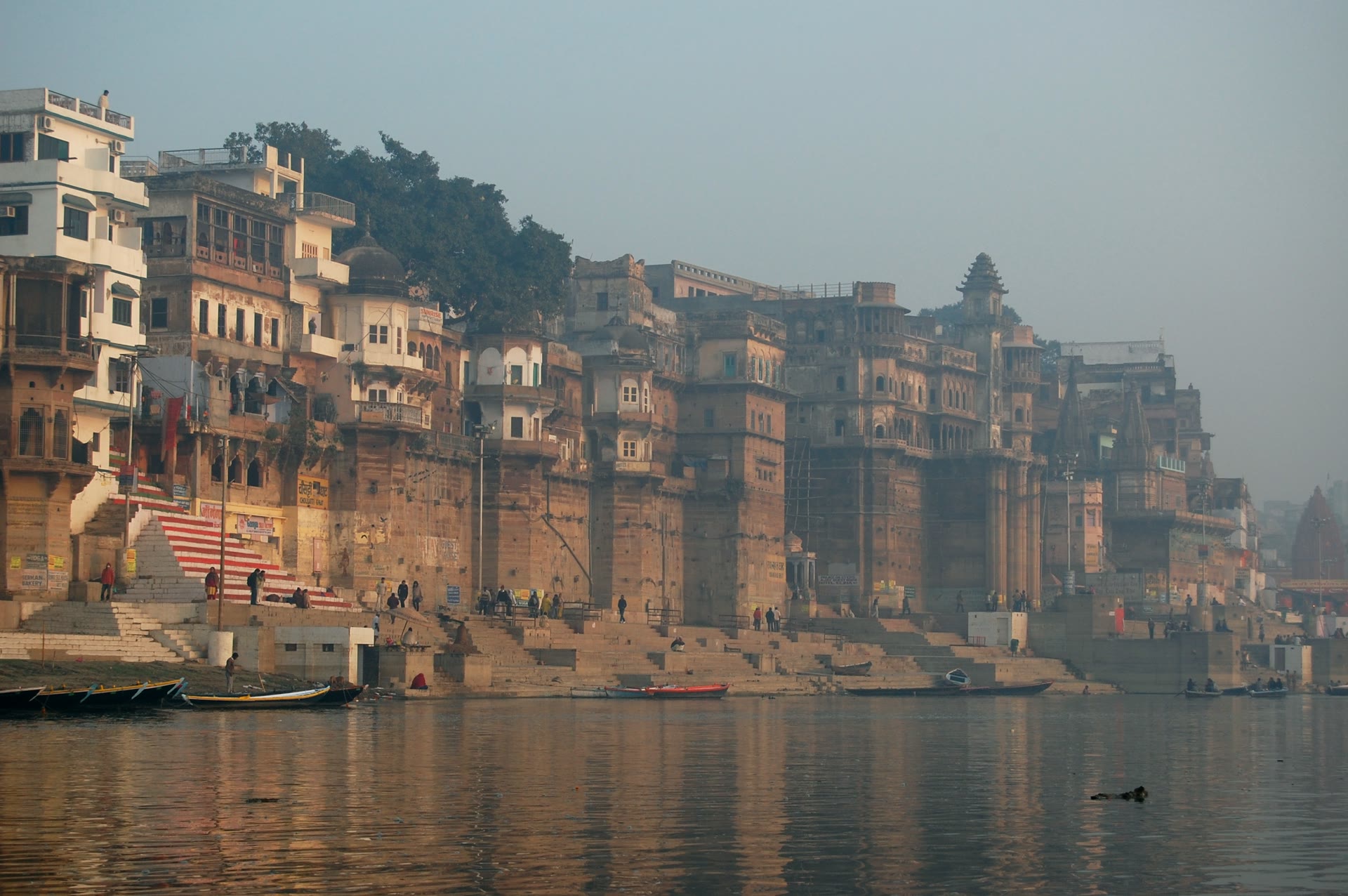
Varanasi's riverfront is lined by ghats, broad stone steps that run down to the Ganges. Each has its own character: Dashashwamedh is the best-known setting for Ganga Aarti, while Manikarnika is an active cremation ghat. Varanasi has 84 ghats,[1] but you do not need to see them all.
Walking the riverfront, watching a ceremony from the steps and drifting past on a boat are three different ways to meet the city. Pick one or two priorities, such as the Aarti, river views, historic sites or a quiet morning walk, and let the rest go.
Understanding the Ghats
At Varanasi's ghats, steps lead to the Ganges for prayer, bathing, cremation, and everyday riverside activity. For many Hindu pilgrims, these practices carry deep religious meaning. You are watching living traditions, so leave room for local people to use the steps and the river.
Some ghats are for worship and bathing, while Manikarnika is an active cremation ghat. You can walk between many of them, but the riverfront is not one level promenade: expect steps and uneven ground.
Things to Do
Offers are only loaded from GetYourGuide after you click. GetYourGuide can then process your IP address and set cookies. Privacy Policy
GetYourGuide partner offers. GoAsia may earn a commission if you book through these offers. Check whether tickets or transfers are included, and follow the attraction's official booking and admission rules.
Key Ghats to Visit
Dashashwamedh Ghat
Dashashwamedh is the most prominent and bustling ghat of Varanasi, close to Kashi Vishwanath Temple. It hosts the grand Ganga Aarti every evening, which draws thousands of devotees and tourists, and many devotees bathe here before they go on to pray at the temple.[2] To watch the ceremony, choose between the steps and a boat on the river, and leave time to find your way down to the water.
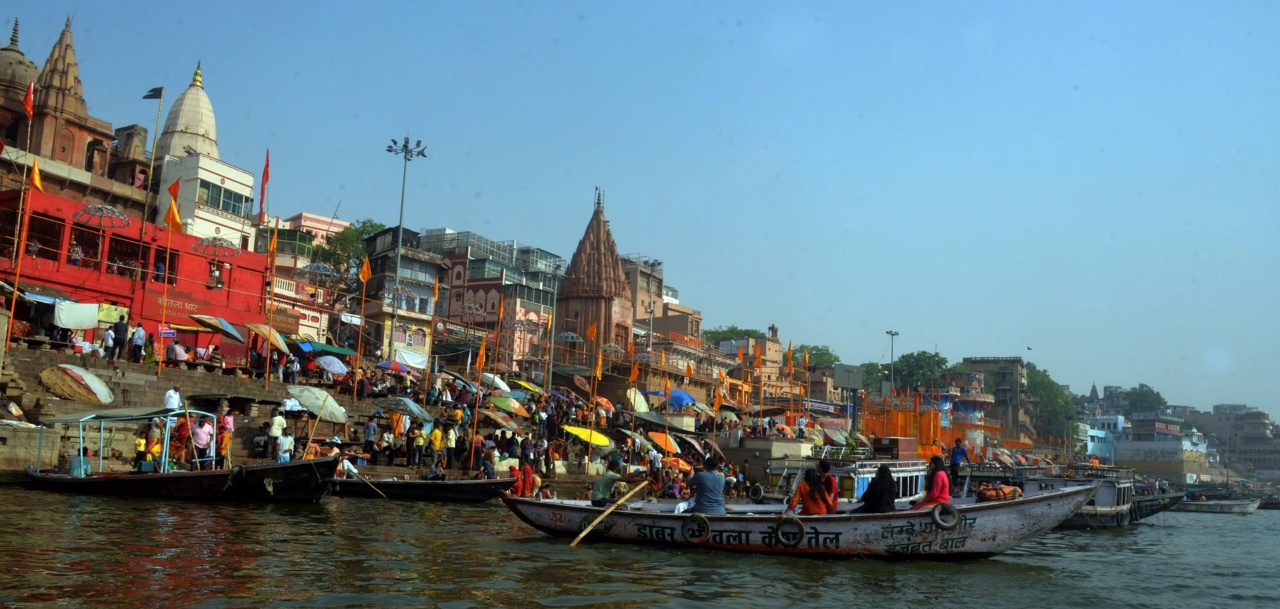
Flower sellers, priests, pilgrims, visitors and boat operators crowd the steps. If it gets too much, walk to a quieter stretch and come back when you are ready.
Manikarnika Ghat
Manikarnika is one of the holiest cremation grounds in India, and cremations take place here around the clock.[3] It is a place of worship and grief. Keep a respectful distance, never photograph ceremonies or grieving people without permission, and put your camera away if you are unsure.
If you want to donate, do so freely and only once you understand what the money supports.
Assi Ghat
Assi Ghat hosts Subah-e-Banaras, an aarti performed at sunrise and in the evening that blends yoga, devotional music, and prayers.[4]
Man Mandir Ghat
Man Mandir Palace, built in the 16th century by Raja Sawai Man Singh of Amber, stands at Man Mandir Ghat. An observatory is tucked inside the palace, with instruments that Raja Jai Singh II added in the 1700s.[5]
Kedar Ghat
Kedar Ghat is one of the oldest and liveliest ghats, named after Lord Kedareshwar (Shiva) and home to the Kedareshwar Temple. Pilgrims who cannot travel to Kedarnath in Uttarakhand believe that worshipping here equals prayers at Kedarnath, and the temple holds daily worship and an evening aarti.[6] It makes a good stop on the walk between the larger ceremony ghats.
The Ganga Aarti Ceremony
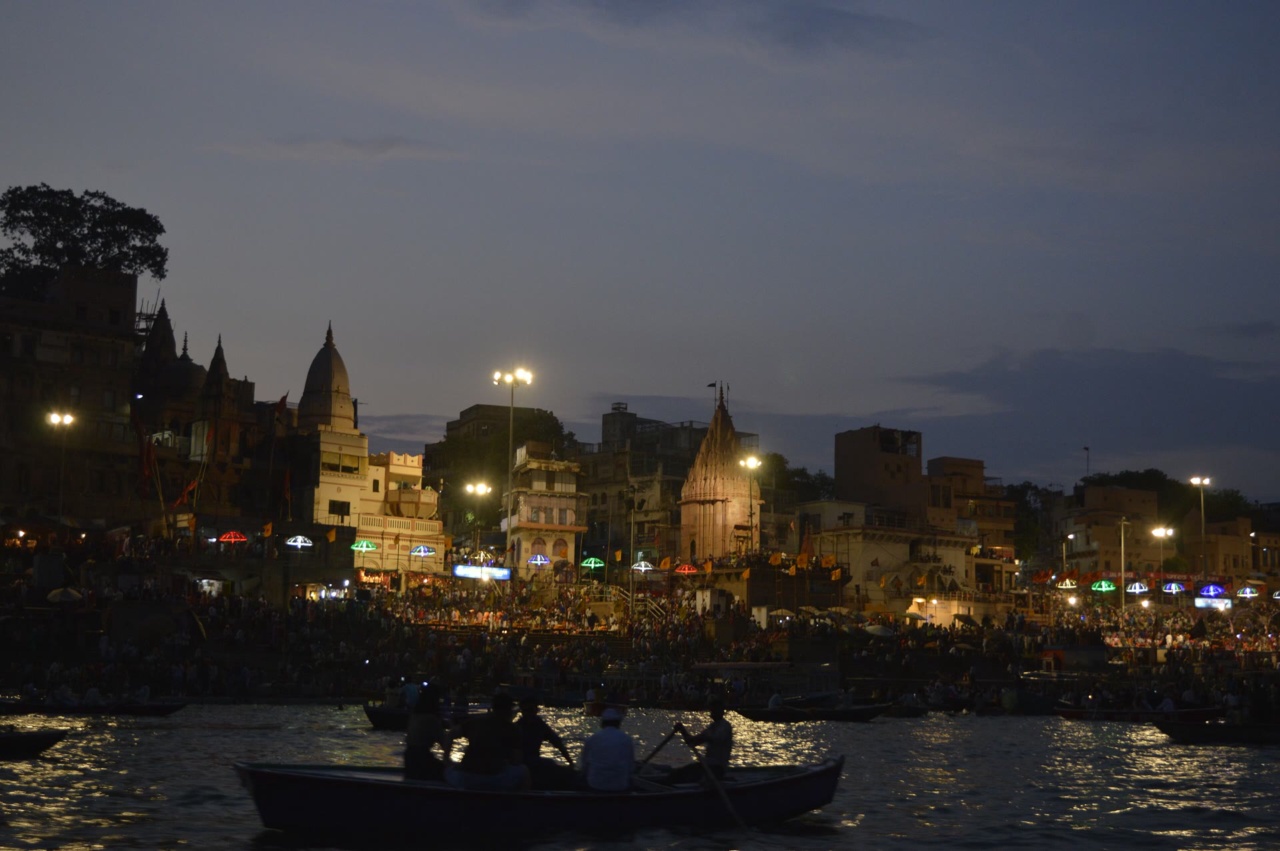
The grand evening Ganga Aarti is held at Dashashwamedh Ghat. It usually begins just after sunset and lasts about 45 minutes.[4] Sunset moves through the year, so ask locally for the start time on your day.
What to Expect
A group of young priests in saffron and cream robes performs in perfect synchrony, holding large multi-tiered brass lamps, incense sticks, and conch shells. The ceremony begins with the blowing of conches, followed by rhythmic chanting of mantras, the ringing of bells, and offerings of fire, flowers, and camphor to the river.[4] People gather on the steps well in advance, and many prefer to watch from boats on the river for a panoramic view.[4] Give worshippers room and follow the directions of the people managing the ceremony area.
Where to Watch
The steps put you close to the ceremony; a boat gives you the view across the water. If you take a boat, agree on where it boards, how long it runs and whether it waits for the ceremony before you settle on a price.
Sunrise Boat Ride
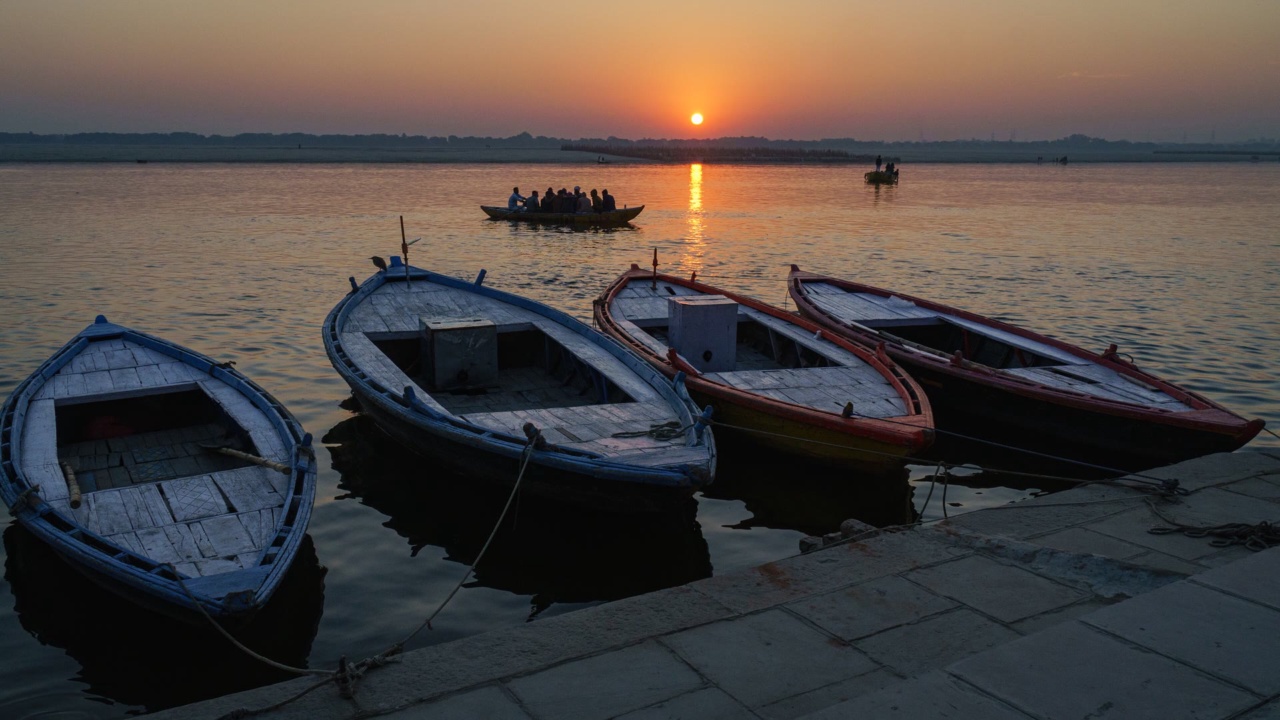
A sunrise boat ride shows you the ghats from the water as the morning bathing and prayers begin. You can hire a local rowing boat or book a scheduled river cruise.
The Bhagirathi is a double-decker cruise vessel for 100 passengers, and the Vivekanand/Manekshaw is a triple-decker for 200. Both tour all 84 ghats with audio commentary on the important ghats.[1]
Alaknanda Cruiseline’s luxury cruises start at ₹700 per person, and its premium evening Aarti cruise at ₹5,000 per person (October 2026).[7] Local rowing boats are priced differently: ask whether the quote is per person or for the whole boat, and agree on the boarding ghat, route, duration and return point before you step in.
Sunrise and evening are different experiences, so book the morning ride and your Aarti spot separately.
Walking the Ghats
A walk from Assi toward Manikarnika passes residential, pilgrimage and ceremony ghats. Take your time: there are steps and detours up to street level along the way, so wear comfortable shoes and carry water.
A local guide can explain the temples, rituals and neighborhood history. Agree on the route, duration and fee before you set off.
Getting to Varanasi
Varanasi has an airport and railway stations. For the last leg, tell your driver the ghat or nearby street you need: vehicles cannot always reach the river steps.
Tips for Visiting Varanasi's Ghats
- Check the forecast before choosing a boat day. Keep plans flexible if rain, heat or river conditions look bad.
- Start with a boat ride. Seeing the ghats in sequence from the river helps you choose where to walk later.
- Be considerate at cremation ghats. Keep a respectful distance, do not intrude on families and never photograph ceremonies or grieving people without permission.
- Come early for the Aarti. People gather well before the ceremony; arrive in good time if you want a place on the steps.
- Dress modestly. Follow any instructions posted at temples or ceremony areas.
- Take a break when you need one. The riverfront can be busy and emotionally intense; step away and come back later.
- Hire a local guide for one walk. Agree on the route and fee first.
- Keep valuables secure in crowded places. Watch your belongings on the busy steps and in the market lanes.
Varanasi rewards a slower visit. Choose a few ghats that matter to you, leave space for the riverfront's everyday rhythms, and build the day around the ceremony or boat ride you want most. For a broader itinerary, see our India travel guide.
Sources and background
Numbers in the text such as [1] refer to these sources.
- [1] Kashi Darshan, Varanasi official visitor portal: River Cruise at Ganga. Retrieved October 20, 2026.
- [2] Kashi Official Web Portal: Dashashwamedh Ghat. Retrieved October 20, 2026.
- [3] Kashi Official Web Portal: Manikarnika Ghat. Retrieved October 20, 2026.
- [4] Kashi Official Web Portal: Ganga Aarti on Varanasi Ghats. Retrieved October 20, 2026.
- [5] Kashi Official Web Portal: Man Mandir Ghat. Retrieved October 20, 2026.
- [6] Kashi Official Web Portal: Kedar Ghat. Retrieved October 20, 2026.
- [7] Alaknanda Cruiseline: Cruise Tour Booking. Retrieved October 20, 2026.
Frequently Asked Questions
Ghats are steps leading down to the Ganges. In Varanasi, different ghats are used for worship, bathing, cremation, and everyday riverside activity. Varanasi has 84 ghats, each with its own history and heritage.
Alaknanda Cruiseline's luxury cruises start at ₹700 per person, and its premium evening Aarti cruise at ₹5,000 per person (October 2026). Local rowing boats are priced differently: agree whether the quote is per person or per boat, the route and duration, and the boarding and return ghats before you board.
The grand evening Aarti is at Dashashwamedh Ghat. It usually begins just after sunset and lasts about 45 minutes, so ask locally for the start time on your day. Subah-e-Banaras at Assi Ghat is a separate program, held at sunrise and in the evening.
Pick your dates around how you cope with heat, rain and crowds, and check the forecast before you travel.
Active cremation sites are places of mourning and worship. Keep a respectful distance, never photograph ceremonies or grieving people without permission, and follow requests from people at the site.
Varanasi has an airport and railway stations. For the last ride to the riverfront, agree a specific ghat or nearby street with your driver, since vehicles cannot always reach the river steps.
The steps bring you closer to the ceremony, while a boat gives a panoramic view across the river. If you book a boat, confirm its boarding point and whether it stays for the Aarti.
Two or three full days leave room for a boat ride, an Aarti, a walk along the ghats, and time in the old city. A shorter visit works if you focus on one or two priorities.