Plan your Philippines ferry trip with this guide covering operators, routes, classes, booking tips, and what to expect on board across the archipelago.
The Philippines is an archipelago of thousands of islands, and for centuries, boats have been the lifeline stitching this scattered nation together. Long before airports and highways, outrigger bancas carried goods and people between fishing villages, and grand inter-island vessels connected distant provinces. That maritime heritage is alive today in an extensive domestic ferry network. From overnight voyages across the Visayan Sea to quick bangka hops between neighboring islands, traveling by ferry here is not just a way to get around - it is a deeply Filipino experience, complete with karaoke on the sundeck, shared meals with strangers, and sunrises over open water that no airplane window can match.
For travelers willing to slow down and embrace island time, the ferry system unlocks corners of the Philippines that flights simply cannot reach. It connects major cities and remote island communities alike.
The Ferry Network in the Philippines
The Philippine ferry network is vast, reflecting the geographic reality of a nation spread across 3 major island groups: Luzon, Visayas, and Mindanao. Manila, Cebu City, and Iloilo serve as important hubs. Batangas Port, south of Manila, is a key gateway: 2GO sails from there to Caticlan, Odiongan, Roxas, Iloilo and Bacolod,[1] and Montenegro Shipping Lines offers online booking for Batangas City to Calapan, Abra de Ilog, Puerto Galera and Odiongan.[2] Cebu's piers connect to Bohol, Leyte and Cagayan de Oro.[3][4][5]
Several major operators serve the network.
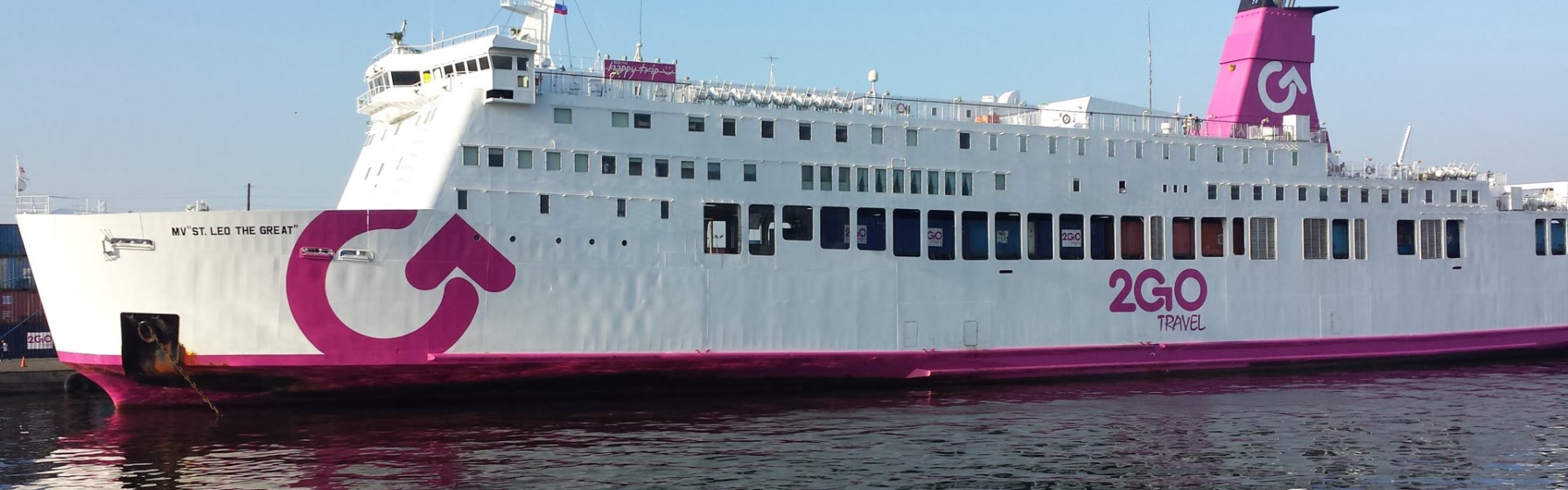
2GO Travel runs overnight and multi-day sailings between Manila and ports such as Cebu, Coron, Puerto Princesa, Dumaguete, Iloilo, Bacolod, Cagayan de Oro, Davao and Zamboanga.[1]
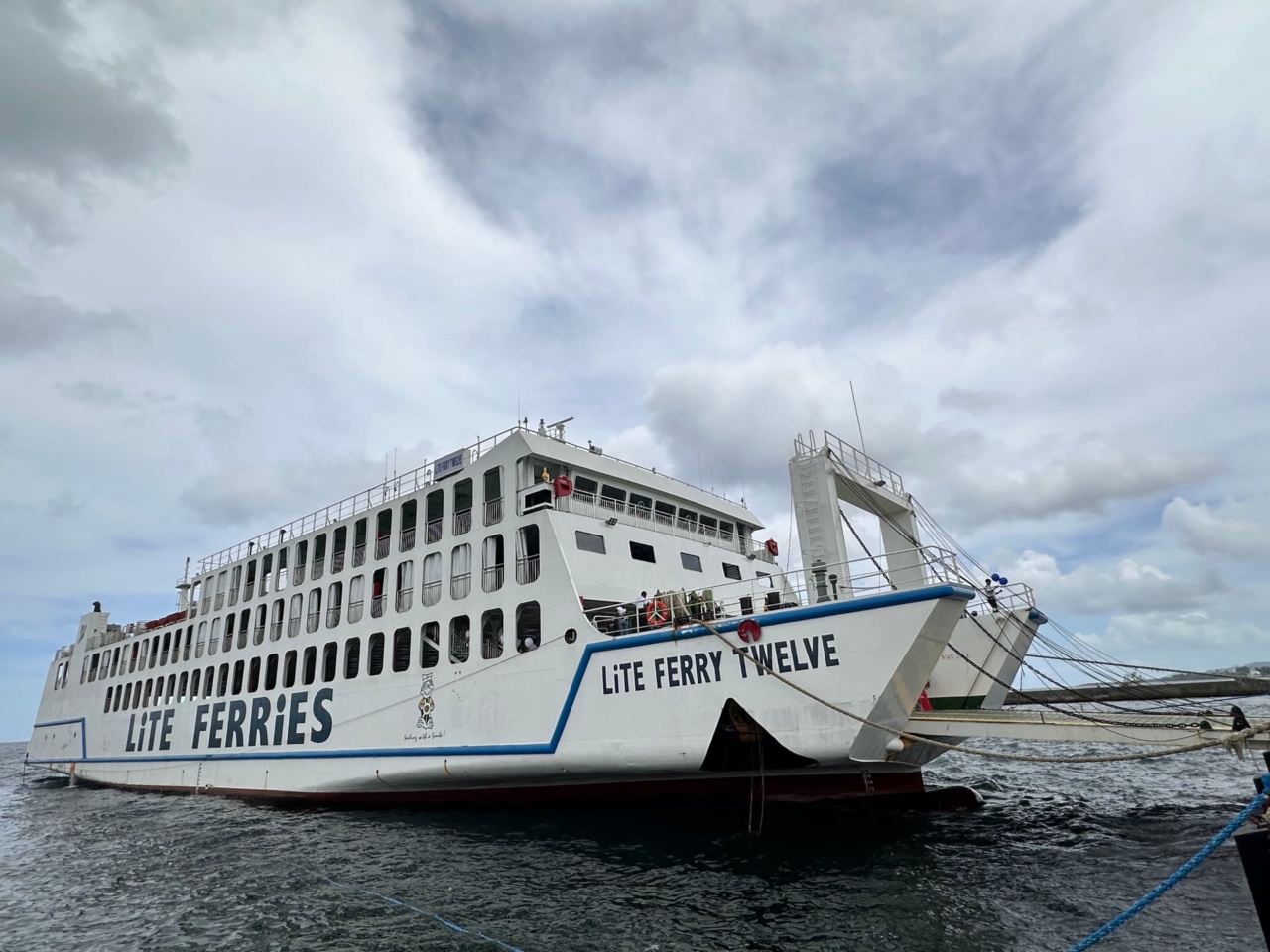
Lite Ferries sails between Cebu City and Tagbilaran,[3]
Trans-Asia Shipping runs passenger vessels to Cebu, Cagayan de Oro, Iligan, Iloilo, Masbate and Tagbilaran,[6] and
Cokaliong Shipping serves routes such as Cebu City to Cagayan de Oro.[4] For shorter crossings,
OceanJet operates fast craft on popular routes including Cebu to Tagbilaran, Cebu to Ormoc, Batangas to Calapan, Bacolod to Iloilo and Cebu to Siquijor.[5] Fast craft are quicker than traditional roll-on/roll-off (RORO) vessels.
The RORO system deserves special mention. The government's nautical highway program links many islands via short RORO ferry hops, allowing buses and private vehicles to drive onto ferries and continue on the other side, and MARINA publishes a matrix of the routes that are currently served.[7] This means you can travel by bus across several islands, hopping ferries at the strait crossings along the way.
Philippine ferries offer a wide range of classes, and the gap between the cheapest and most expensive can be enormous in terms of comfort. Cokaliong, for example, sells Economy, Lounge, Tourist, Business Class, shared Cabin, Cabin for 2 and Suite accommodations,[4] and 2GO sells Business Class, Tourist, Cabin, State Room, Suite and VIP accommodations.[8]
Class
What to Expect
Best For
Economy / Open
The cheapest accommodation, usually a shared area. Can be crowded.
Budget travelers, short crossings
Tourist Class
A shared air-conditioned area with seats or bunks.
Overnight trips on a budget
Business / Cabin
Private or semi-private cabins with beds.
Couples, families, comfort seekers
Suite / State Room
Private rooms at the top of the price range.
Those wanting more privacy at sea
Fast Craft
Air-conditioned seating for short crossings.
Day crossings, time-conscious travelers
For overnight voyages on 2GO or Cokaliong, Tourist Class is the cheaper way to get air conditioning and a place to sleep without paying cabin prices. For example, Cokaliong's overnight sailing from Cebu City to Cagayan de Oro leaves at 7:00 PM and arrives at 7:00 AM; its rates in October 2026 run from PHP 1,686 per person in Economy to PHP 2,400 for a shared cabin bed.[4] Lite Ferries' Cebu City to Tagbilaran crossing takes 4 hours, with a daily 10:00 PM departure and an additional 1:00 PM departure on selected days.[3] Economy class on long crossings can be an adventure, but sleep quality suffers.
Booking and Tickets
Booking methods vary by operator and route. 2GO Travel and OceanJet sell tickets online, which is recommended especially during peak travel seasons like Holy Week, Christmas, and the Sinulog or Ati-Atihan festivals.[1][5] You can also compare routes and book ferry tickets on GoAsia.cc, which is particularly useful when weighing options across multiple operators for the same route.
Smaller operators still welcome walk-in passengers at their ticketing counters.[2] Rules differ by company. 2GO tickets are only valid on the departure date printed on them or on the rescheduled date after a delay or cancellation, and tickets not used on that date are void.[8] Montenegro Shipping Lines asks passengers to be at the port 1 hour before departure for short crossings and 4 hours for long-haul trips, and to present a valid government ID when the ticket is validated.[2] 2GO's gate closes 1 hour before departure.[1]
Terminal fees depend on the port. At Manila North Harbor, 2GO collects the PHP 104.50 passenger terminal fee together with the ticket price.[8] At Caticlan Seaport, the terminal fee, environmental fee and boat fare for Boracay are paid through the Boracay iPass or at the port gate by showing the QR code.[9] Operators such as OceanJet photograph the ID before payment when a student, senior citizen or PWD fare is used; these fares are for Filipino nationals only.[5]
What to Expect on Board
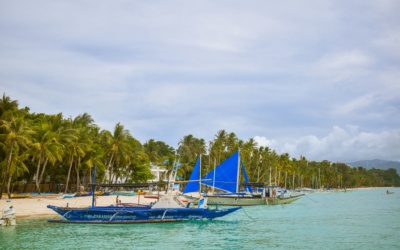
The on-board experience varies wildly depending on the vessel. Trans-Asia's passenger vessels, for example, have restrooms, dining areas, lounges and gift shops.[6] On a local bangka crossing a narrow strait, you will sit on a wooden bench with the spray of the sea on your face and the engine thrumming beneath your feet.
Food is available on larger vessels, and many seasoned travelers bring their own: packed rice meals from a local carinderia are common sights. On fast craft the crossings are short enough that meals are rarely an issue. On larger ferries, keep valuables with you rather than in checked baggage areas. A power bank is a good idea, because you cannot count on a socket at every seat.
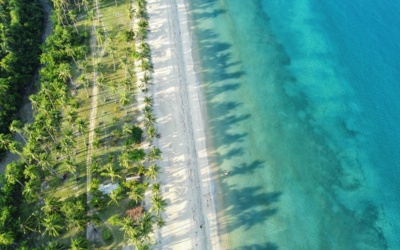
The scenic rewards can be extraordinary. Routes through the Visayas pass emerald islands fringed with white sand, and the Manila to Coron route crosses open ocean before weaving through the dramatic limestone karst formations of northern Palawan.
Filipino ferry culture has its own rhythm. Passengers share snacks with seatmates, children run freely, and someone inevitably pulls out a portable speaker. Embrace it - this communal atmosphere is part of the charm.
Tips for Ferry Travel in the Philippines
Book early during holidays. Ferries can sell out during Holy Week (Semana Santa), Christmas, and major regional festivals. Booking weeks in advance is not excessive during these periods.
Bring a jacket or light blanket. Air-conditioned sections on ferries and fast craft are often aggressively cold. Filipinos call it "arctic aircon" for a reason.
Arrive early at the port. Between terminal fees, security screening, and boarding, the process takes time. Montenegro Shipping Lines asks passengers to be at the port 1 hour before departure on short crossings, and 2GO closes its gate 1 hour before departure.[2][1]
Carry motion sickness medication. The seas between islands can be rough, particularly during the habagat (southwest monsoon) season from June to October. You can buy it at Philippine pharmacies.
Check weather advisories. Trips are cancelled when seas are rough or winds are strong. In September 2025, for example, ferries from Masbate cancelled trips because of rough seas and strong winds.[10] During typhoon season (roughly June to November), always have a backup plan and flexible dates.
Secure your belongings. Petty theft is possible on crowded economy sections of overnight ferries. Keep your bag close and use a small lock.
Learn a few Tagalog or Bisaya phrases. Port staff and crew in smaller ports may speak limited English. "Pila ang ticket?" (How much is the ticket? - in Bisaya) and "Asa ang pier?" (Where is the pier? - in Bisaya) go a long way.
Respect local customs. Filipinos are warm but modest. Dress appropriately in communal sleeping areas, keep noise levels reasonable during nighttime crossings, and always dispose of trash properly - the ocean does not need more plastic.
Sources and background
Numbers in the text such as [1] refer to these sources.
[1]2GO Group, Inc.: Sailing Schedule. Retrieved October 15, 2026.
[2]Montenegro Shipping Lines: Schedule & Fares. Retrieved October 15, 2026.
[3]Lite Ferries (Lite Shipping Corporation): Schedule. Retrieved October 15, 2026.
[4]Cokaliong Shipping Lines: Schedules & Rates. Retrieved October 15, 2026.