Laos occupies a special place in the heart of Southeast Asia. Sandwiched between Thailand, Vietnam, Cambodia, China, and Myanmar, this landlocked nation has long been overshadowed by its more touristed neighbors. Yet that relative obscurity is precisely what makes it so compelling. The pace of life here is famously unhurried, captured in the local saying "bor penyang" (don't worry), and travelers who embrace that rhythm are rewarded with some of the most genuine cultural experiences the region has to offer.
The country unfolds along the Mekong River, which serves as both a lifeline and a natural highway. From the misty mountains of the north, where hill tribes maintain centuries-old traditions, to the river islands of the far south where Irrawaddy dolphins surface in the current, Laos is a place of quiet beauty. Saffron-robed monks collecting morning alms, limestone karst peaks jutting from emerald rice paddies, and the echo of gongs from forest monasteries create an atmosphere that feels timeless. For travelers seeking something beyond the well-worn backpacker trail, Laos delivers profoundly.
Tourism infrastructure here is simpler than in Thailand or Vietnam, and that is part of the charm. Expect fewer international hotel chains and more family-run guesthouses, fewer superhighways and more winding mountain roads. The reward for a little extra patience is access to a country that still feels genuinely unspoiled.
Top Destinations
Luang Prabang
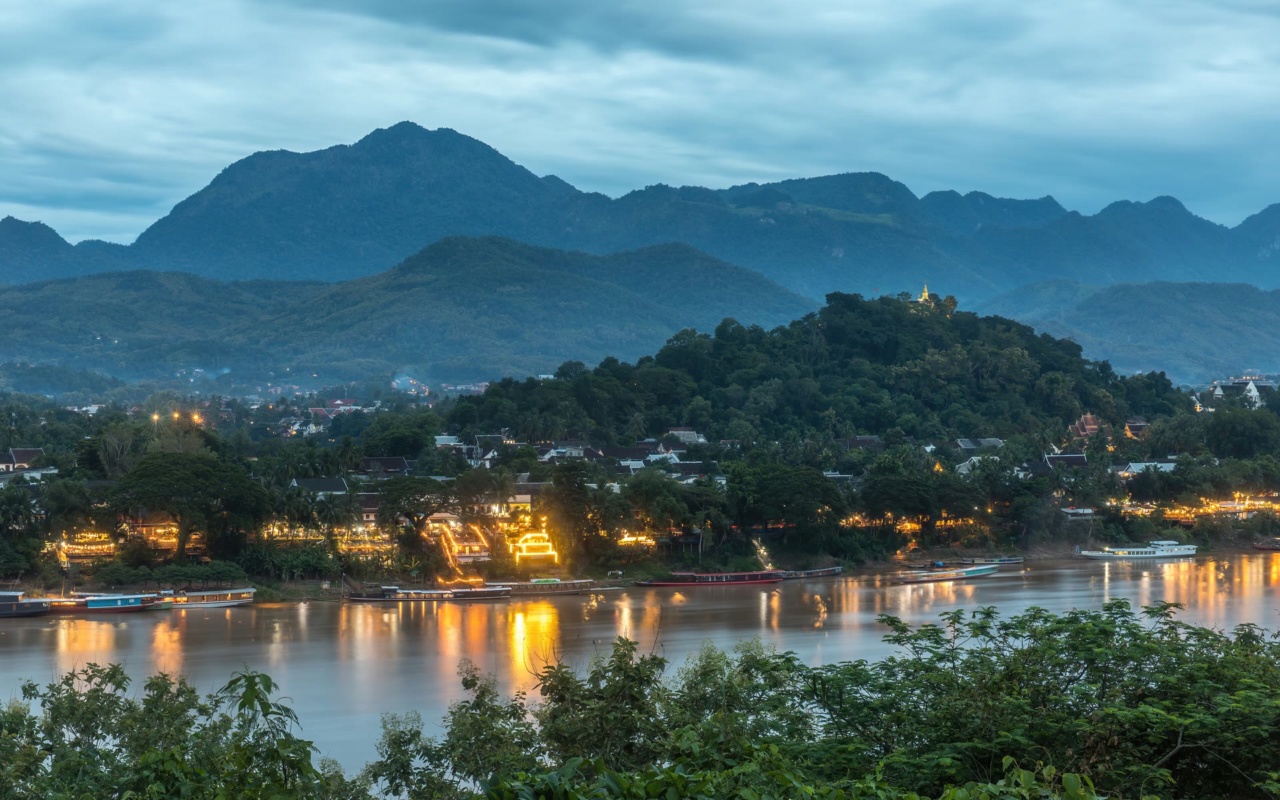
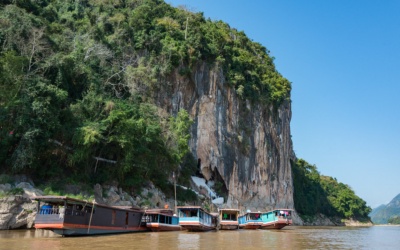
Luang Prabang is the jewel of Laos and a UNESCO World Heritage Site.[1] Nestled at the confluence of the Mekong and Nam Khan rivers, this former royal capital is a mesmerizing blend of traditional Lao wooden houses and elegant French colonial architecture. The town is compact and walkable, with gilded Buddhist temples scattered among its leafy streets. The daily alms-giving ceremony at dawn, where hundreds of monks silently collect sticky rice from kneeling residents, is one of Southeast Asia's most moving rituals. Beyond the town, the Kuang Si Waterfalls cascade through turquoise pools perfect for swimming, and the Pak Ou Caves house thousands of Buddha statues deposited by pilgrims over centuries. Luang Prabang's famous night market offers excellent textiles, handicrafts, and affordable street food.
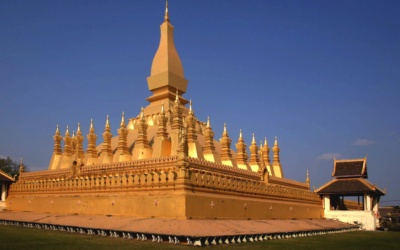
The Lao capital is one of Asia's most laid-back capital cities. Strung along the Mekong riverbank, Vientiane has a pleasantly low-key atmosphere with wide boulevards, crumbling French villas, and a handful of significant temples. Pha That Luang, the golden stupa that serves as the national symbol, is the most important religious monument in the country. Wat Si Saket, the oldest surviving temple in the city, contains thousands of miniature Buddha images in wall niches. The COPE Visitor Centre provides a sobering but essential education about the impact of unexploded ordnance (UXO) left from wartime bombing. The sunset views over the Mekong, with Thailand visible on the opposite bank, are best enjoyed from one of the riverside restaurants along Fa Ngum Road.
Vang Vieng
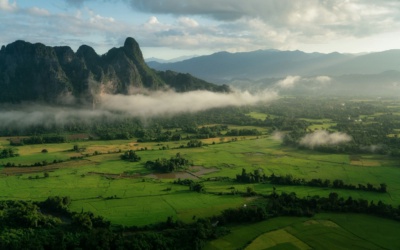
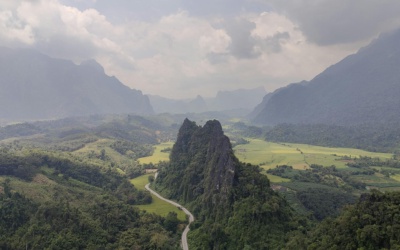
Once notorious for reckless party tourism, Vang Vieng has matured significantly and now offers a compelling mix of adventure and natural beauty. The town sits in a dramatic valley surrounded by towering limestone karsts, and the Nam Song River winds through the landscape. Rock climbing, kayaking, hot air ballooning, and caving are all popular activities. The Tham Chang cave system is easily accessible and offers panoramic views from its entrance. Blue Lagoon, a series of natural swimming holes fed by springs, provides a refreshing break. While some bars remain, the overall vibe has shifted toward outdoor adventure and eco-tourism, making it appealing to a much broader range of travelers.
The Bolaven Plateau
In southern Laos, the Bolaven Plateau rises above the surrounding lowlands, creating a cooler climate ideal for coffee cultivation. Lao coffee, particularly from this region, is among Southeast Asia's best-kept secrets. Travelers can visit coffee plantations, learn about the growing process, and sample exceptional beans. The plateau is also home to spectacular waterfalls, including Tad Fane, which plunges into a deep gorge, and Tad Yuang, surrounded by lush forest. The area is perfect for motorbike loops, with quiet roads connecting ethnic minority villages, waterfalls, and plantation homestays. Paksong serves as the main base town.
Si Phan Don (4,000 Islands)
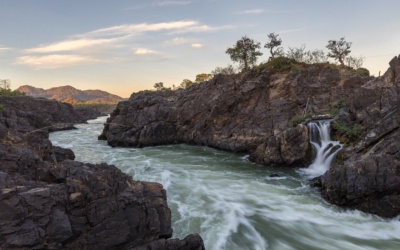
Si Phan Don: At the southern tip of Laos, just before the Mekong crosses into Cambodia, the river splinters into a vast network of channels and islands known as Si Phan Don. Don Det and Don Khon are the main traveler islands, connected by a French colonial bridge. Life here moves at an almost impossibly slow pace. Hammocks, cold Beer Lao, and stunning sunsets over the Mekong define the experience. The Khone Phapheng Falls are a thundering spectacle nearby. The last known Irrawaddy dolphin in the transboundary pool on the Laos Cambodia border died in 2022, according to WWF Laos. WWF Cambodia describes the Cambodian Mekong as a remaining stronghold, so dolphin sightings are no longer a realistic activity in Si Phan Don.
Nong Khiaw and Muang Ngoi
For travelers seeking mountain scenery and genuine village life, the twin destinations of Nong Khiaw and Muang Ngoi in northern Laos are hard to beat. Nong Khiaw sits on the Nam Ou River amid soaring limestone cliffs, with excellent trekking to viewpoints and caves. A short boat ride upstream, Muang Ngoi is a tiny village accessible only by river, with no road connection. Electricity arrived relatively recently, and the atmosphere remains profoundly peaceful. Walks to nearby ethnic Khmu and Hmong villages offer a window into rural life far removed from modernity.
Phonsavan and the Plain of Jars
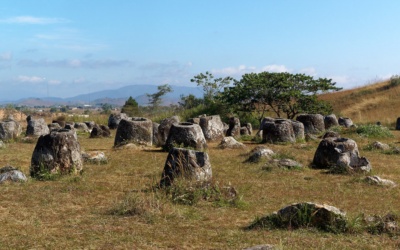
Xieng Khouang Province, with Phonsavan as its capital, is home to one of Southeast Asia's greatest archaeological mysteries. The Plain of Jars features hundreds of massive stone vessels, some weighing several tons, scattered across the landscape. Their exact purpose remains debated, though they are believed to be ancient funerary urns. Xieng Khouang is one of the provinces most affected by unexploded ordnance, and bomb craters still pockmark the jar sites.[2] Visit only the sites that are open to visitors and stay on marked paths, and the experience of walking among these enigmatic megaliths is both haunting and unforgettable.
Things to Do
Offers are only loaded from GetYourGuide after you click. GetYourGuide can then process your IP address and set cookies. Privacy Policy
GetYourGuide partner offers. GoAsia may earn a commission if you book through these offers. Check whether tickets or transfers are included, and follow the attraction's official booking and admission rules.
Getting Around
Traveling through Laos requires flexibility and patience, but the journey itself is often the highlight. The country's mountainous terrain means that distances that look short on a map can take many hours by road.
Buses and minivans: The most common form of long-distance transport. VIP buses are the more comfortable choice on major routes. Local buses on rural routes can be crowded and slow but offer authentic experiences. Minivans are faster but often driven aggressively and packed beyond capacity. Book through your guesthouse or at the bus station.
The Lao-China Railway: A transformative addition to Lao transport, the high-speed rail line connects Vientiane to Boten on the Chinese border, passing through Vang Vieng and Luang Prabang.[3][4] This has made northern Laos much more accessible. Tickets can be bought at station windows or in the LCR Ticket app.[4]
Boats: The Mekong River remains a functioning transport corridor. The slow boat from Huay Xai (on the Thai border) to Luang Prabang is a classic journey, and many travelers break it in the riverside village of Pak Beng. It drifts past jungle-clad mountains and remote villages. River conditions change with the water level, so check that the boat carries life jackets and avoid overcrowded vessels.[5] Smaller boats operate on the Nam Ou River in the north. In the south, boats shuttle between the islands of Si Phan Don.
Motorbike rental: Widely available in tourist towns, motorbikes offer the freedom to explore at your own pace. Semi-automatic scooters are the usual choice. Road conditions vary enormously, from smooth highways to rutted dirt tracks. Check the bike thoroughly before renting, wear a helmet (rental shops may not supply one), and never leave your passport as a deposit, because there are reports of rental companies keeping passports and demanding high fees.[5] If you drive, bring an International Driving Permit and your home licence.[5]
Tuk-tuks and songthaews: Within towns, motorized tuk-tuks (called jumbos in Vientiane) are the main form of local transport. Agree on a fare before getting in. Songthaews (converted pickup trucks with bench seats) serve as shared taxis on shorter intercity routes.
Domestic flights: Lao Airlines flies domestic routes from Vientiane to Luang Prabang, Pakse, Savannakhet, Xieng Khouang (Phonsavan), Oudomxay and other towns.[6] Flights save time, but Lao Airlines reserves the right to change its schedule without notice.[7]
Best Time to Visit
Laos has a tropical monsoon climate divided into three broad seasons, though conditions vary significantly between the lowlands and the mountainous north.
Cool and dry season (November to February): This is the most popular time to visit. Temperatures are comfortable, rainfall is minimal, and skies are generally clear. In the northern mountains around Luang Prabang and Phongsali, nights can be cold, so pack a warm layer. This is peak tourist season, so popular destinations will be busier and accommodation prices higher.
Hot season (March to May): Temperatures soar in the lowlands and the Mekong valley. Burning season, when farmers clear fields with fire, can create a thick haze that blankets northern Laos and significantly reduces air quality and visibility. April is the hottest month but also hosts Pi Mai Lao (Lao New Year), a joyous water festival celebrated with citywide water fights. The Bolaven Plateau remains cooler due to its elevation.
Wet season (May to October): The monsoon brings daily downpours, usually in intense afternoon bursts rather than all-day rain. The landscape turns an extraordinary vivid green, waterfalls are at their most powerful, and tourist numbers drop dramatically. Some remote roads become impassable, and river travel can be affected by high water levels.[5] However, this is a rewarding time to visit for those who do not mind occasional disruptions, as you will often have temples and attractions to yourself.
Culture and Customs
Lao culture is deeply influenced by Theravada Buddhism, which permeates daily life in ways both visible and subtle. Understanding and respecting local customs will greatly enrich your experience.
Buddhism and temple etiquette: Laos has a great many Buddhist temples. When visiting temples, dress modestly by covering shoulders and knees. Remove shoes before entering any temple building. Women should never touch a monk or hand anything directly to one. If you wish to give something, place it on a nearby surface for the monk to pick up. When sitting in a temple, tuck your feet behind you so they do not point toward Buddha images or monks.
The alms-giving ceremony: The morning alms round in Luang Prabang is sacred, not a tourist spectacle. If you wish to observe, maintain a respectful distance, do not use flash photography, and do not touch the monks. If you want to participate by offering food, purchase sticky rice from local vendors rather than bringing inappropriate items. Sitting or standing above the monks (on chairs or elevated platforms) is considered disrespectful.
Greetings: The traditional Lao greeting is the nop, a prayer-like gesture with palms pressed together at chest level accompanied by a slight bow. It is used to greet, thank, and say goodbye. Handshakes are becoming more common in urban areas, especially with foreigners, but a nop is always appreciated.
Modesty and social norms: Lao people tend to be reserved and soft-spoken. Raising your voice or displaying anger in public causes loss of face for everyone involved and is considered extremely rude. Public displays of affection are frowned upon. The head is considered the highest part of the body spiritually, so do not touch anyone's head. The feet are the lowest, so avoid pointing your feet at people or sacred objects.
Tipping: Tipping is not a traditional part of Lao culture, but it is appreciated in tourist-oriented establishments. Rounding up the bill or leaving a small tip at restaurants that cater to foreigners is a kind gesture. For guides and drivers, tips are customary and often form a significant part of their income.
Food and Drink
Lao cuisine is distinct from Thai food despite superficial similarities. It tends to be earthier, more herbaceous, and centered around sticky rice, which is eaten at almost every meal.
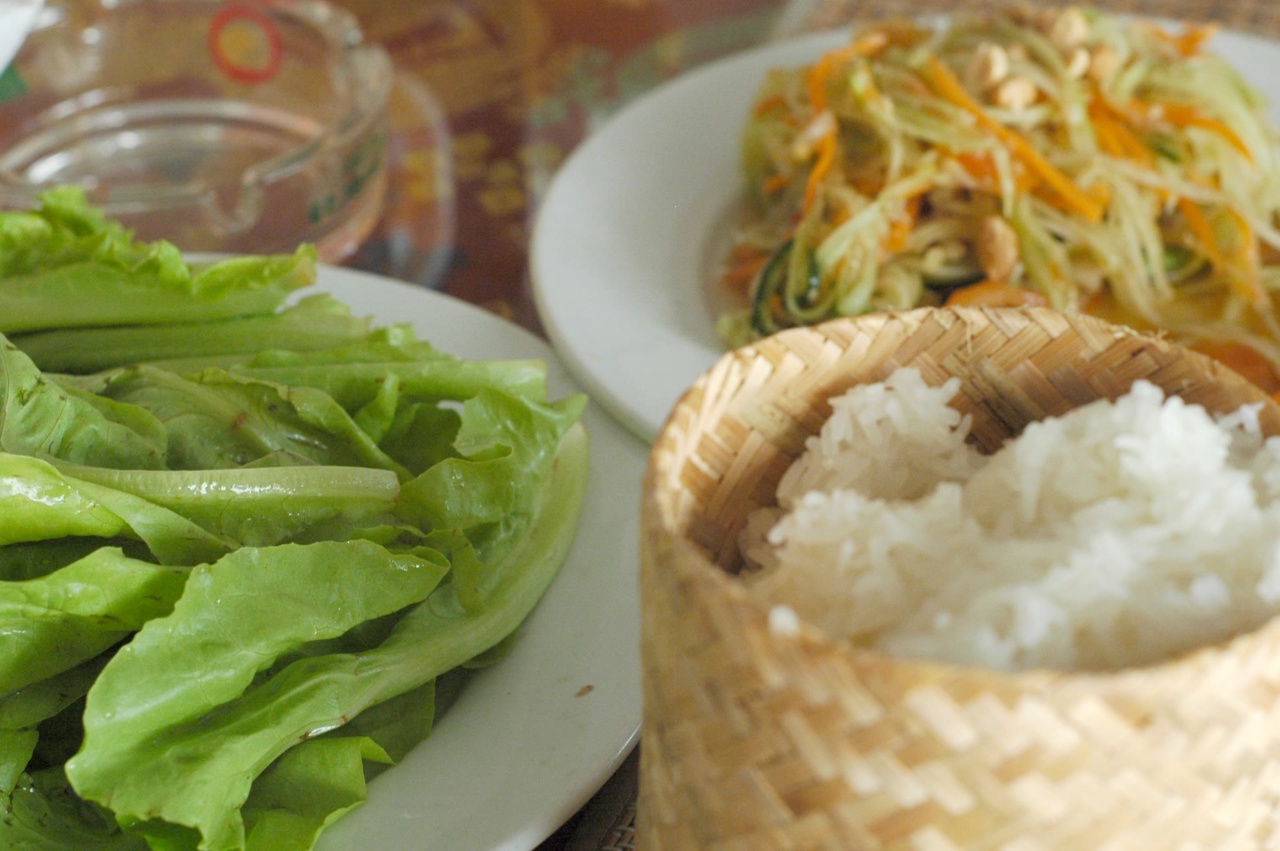
Sticky rice (khao niao): The foundation of every Lao meal. It is served in small bamboo baskets and eaten with the fingers, rolled into small balls and used to scoop up dishes. Learning to eat sticky rice properly is one of the great pleasures of visiting Laos.
Laap: Often considered the national dish, laap is a minced meat salad seasoned with lime juice, fish sauce, chili, mint, and toasted rice powder. It can be made with chicken, pork, duck, fish, or beef. The toasted rice powder gives it a distinctive nutty crunch.
Tam mak hoong: The Lao version of green papaya salad, pounded in a mortar with chilies, lime, fish sauce, fermented crab paste (padaek), and tomatoes. It is typically spicier and funkier than its Thai counterpart due to the generous use of padaek, a pungent fermented fish paste that is the backbone of Lao seasoning.
Or lam: A rich, complex stew from Luang Prabang made with meat, eggplant, herbs, and a unique ingredient called sakhan (a woody vine with a numbing, peppery quality). It is slow-cooked and deeply flavorful.
Khao piak sen: Lao-style noodle soup with thick, hand-rolled rice noodles in a starchy, comforting broth. Often served with chicken or pork, it is a popular breakfast dish and the Lao answer to Vietnamese pho.
Sai oua: Lao herbal sausage stuffed with lemongrass, galangal, kaffir lime leaves, and chilies. Grilled over charcoal and eaten with sticky rice and fresh vegetables, it is a street food staple.
French influences: The colonial legacy lives on in excellent baguettes (khao jii), which are baked fresh every morning and stuffed with pate, chili sauce, pickled vegetables, and herbs for a delicious and inexpensive sandwich. French-style coffee, brewed strong through a cloth filter and served with sweetened condensed milk, is another holdover.
Beer Lao: The national beer is genuinely one of the best lagers in Southeast Asia and a source of considerable national pride. It is served everywhere and is very affordable. Lao-Lao, a potent rice whiskey, is the traditional spirit and is often offered as a gesture of hospitality in rural areas. Declining politely is acceptable, but accepting at least a sip is a sign of respect.
Street food and markets: Morning markets (talat sao) are the best places to experience Lao food culture. Vendors sell everything from grilled meats on sticks to bags of fresh herbs, chili pastes, and mysterious fermented delicacies. Night markets in Luang Prabang and Vientiane offer affordable set meals of rice with multiple toppings. Street food is generally safe if you choose stalls with high turnover and freshly cooked items.
Visa and Entry Requirements
Laos is relatively straightforward to enter for most nationalities, though requirements vary depending on your passport.
Visa on arrival: Available at major entry points such as international airports and border crossings. The visa on arrival allows a stay of up to 30 days and can be extended once.[8] The fee and the documents you need depend on your nationality and the entry point, so check them with a Lao embassy or consulate before you travel.
E-visa: Laos offers an electronic tourist visa for citizens of many countries, which you apply for online before arrival. It is processed within 3 working days after the application and fee are complete, and eVisa holders use a special lane at the arrival port.[9] It is accepted only at designated ports, so check the list before you apply.
eVisa validity and stay: The official Lao eVisa FAQ says that the approval letter is valid for up to 60 days after issue, while the eVisa grants a stay permit of 30 days from arrival and is single-entry only. Your passport must be valid for more than 180 days from the date of arrival, and you must print the approval letter.[9] Check the official Lao eVisa FAQ and the designated port list before applying.
Visa-free entry: Some nationalities are exempt from the visa requirement. The Department of Immigration lists the exemptions, so check whether your passport is covered before you travel.[8]
Extensions: The visa on arrival can be extended once.[8] Ask the Department of Immigration about fees before your stay permit runs out, and do not overstay.
Border crossings: Laos has international borders with Thailand, Vietnam, Cambodia, China, and Myanmar. The eVisa is accepted at the Lao-Thai Friendship Bridges I, II and IV, at Boten on the Chinese border and at Boten and Khamsavath railway stations, among others.[9] Not all border crossings issue visas on arrival, so research your specific crossing point in advance.
Lao Digital Immigration Form (LDIF): Foreign nationals and stateless passport holders using Wattay, Luang Prabang or Pakse international airports or Lao-Thai Friendship Bridge I must complete the digital immigration form for arrival and departure. Submit it within the three days before each arrival and departure through the official immigration portal.[10] LDIF replaces paper arrival and departure cards at these checkpoints; it is not a visa. Check the current checkpoint coverage before travel. LDIF.
Safety and Health
General safety: Petty crime can occur in tourist areas and around ATMs, and travelers regularly report bag snatches, often by people on motorcycles. Hold your bag on the side away from the road, do not display valuables, and take care of your possessions on overnight public transport.[5]
Unexploded ordnance (UXO): This is a unique and serious concern in Laos. The national UXO programme calls it the most heavily bombed country in the world in terms of unexploded ordnance per capita, and says it can be found in rice fields, on hillsides, along roads and paths and even in the centers of provincial towns.[2] Keep to main routes in rural areas and do not pick up metal objects, and note that the risk is higher after flash floods or landslides in the rainy season.[5] Stick to well-traveled trails when trekking.
Road safety: Roads in Laos can be dangerous. Roads are often in poor condition, and travel after dark significantly increases the risk of an accident, as vehicles often do not have lights and livestock strays onto the road.[5] If renting a motorbike, ride defensively, avoid riding at night, and make sure your travel insurance covers motorbike accidents.[5]
Health precautions: Consult a travel health clinic before your trip. The US CDC recommends being up to date on routine vaccines and recommends hepatitis A vaccination for unvaccinated travelers, typhoid vaccination for most travelers and hepatitis B vaccination for unvaccinated travelers under 60.[11] For malaria, CDC reports transmission in the southern provinces (Attapeu, Champasak, Khammouane, Salavan, Savannakhet and Sekong), rare cases in the north and none in Luang Prabang and Vientiane.[11] Dengue is spread by mosquito bites, so cover exposed skin, use insect repellent and sleep in screened or air-conditioned rooms or under a bed net.[11]
Water safety: Choose safe food and drinks, and do not swim in fresh water, since CDC notes that schistosomiasis is found in Laos.[11] Bottled water is widely available.
Medical facilities: Healthcare in Laos is limited. CDC notes that trauma care centers are uncommon outside urban areas and recommends medical evacuation insurance, so comprehensive travel insurance with evacuation cover is essential.[11]
Scams: The most common issues involve inflated tuk-tuk prices, so always agree on fares beforehand. Never leave your passport as a deposit when hiring a motorbike.[5] At some border crossings, officials may request unofficial fees, so check the official visa fee in advance.
Budget Tips
Laos is an affordable destination, though not quite as cheap as it once was. The Lao kip (LAK) is the official currency, but Thai baht and US dollars may be accepted for larger transactions. Prices are sometimes quoted in multiple currencies.
Budget travelers: Stay in basic guesthouses or hostels, eat at local markets and street stalls, travel by local bus or songthaew, and drink Beer Lao at local prices.
Mid-range travelers: Boutique guesthouses and small hotels with air conditioning and hot water, meals at tourist restaurants, private minivan transfers, and organized day tours. Luang Prabang tends to be more expensive than less-visited areas.
Luxury travelers: Laos has a growing collection of high-end boutique hotels and riverside resorts, particularly in Luang Prabang, including properties such as Amantaka and Sofitel. Fine dining options are limited but expanding, and private guided tours with experienced operators are available.
Money matters: ATMs are available in all major towns and dispense kip. Many also offer Thai baht. ATMs usually charge a withdrawal fee. Carry cash when traveling to rural areas, as ATMs may be unavailable. Credit cards are accepted at upscale hotels and restaurants in Vientiane and Luang Prabang but rarely elsewhere.
Where to save: Eat where locals eat. The food is better and a fraction of the price. On the Vientiane to Luang Prabang route, compare the train with the VIP bus. Rent a bicycle instead of hiring tuk-tuks for getting around towns like Luang Prabang and Vientiane. Buy water in large bottles rather than small ones, or carry a reusable bottle with a filter. Book accommodation directly with guesthouses rather than through booking platforms, as owners often offer better rates in person. Travel in the wet season for lower prices and fewer crowds.
Bargaining: Gentle bargaining is acceptable at markets and for tuk-tuk rides but is not as aggressive a practice as in some other Asian countries. A friendly, smiling approach works best. Fixed prices are standard in restaurants and shops.
Sources and background
Numbers in the text such as [1] refer to these sources.