Thailand has earned its reputation as the gateway to Southeast Asia for good reason. The country delivers an intoxicating mix of ornate Buddhist temples, limestone karsts rising from turquoise seas, night markets sizzling with pad thai and grilled satay, and a culture so welcoming it has long been known as the Land of Smiles. First-time visitors and seasoned travelers alike find themselves drawn back again and again.
The sheer variety packed into this single country is staggering. You can haggle for vintage finds in Bangkok's Chatuchak Weekend Market on a Saturday, trek through misty hill-tribe villages near Chiang Rai on a Tuesday, and be snorkeling over pristine coral reefs in the Andaman Sea by Friday. Thailand's well-developed tourism infrastructure makes all of this remarkably easy and affordable, without sacrificing authenticity once you step beyond the tourist trail.
What truly sets Thailand apart, though, is the texture of daily life: monks in saffron robes collecting alms at dawn, longtail boats puttering through mangrove channels, the perfume of jasmine garlands at a spirit house, and the universal Thai instinct to turn any gathering into a feast. This is a country that rewards curiosity at every turn.
Top Destinations
Bangkok
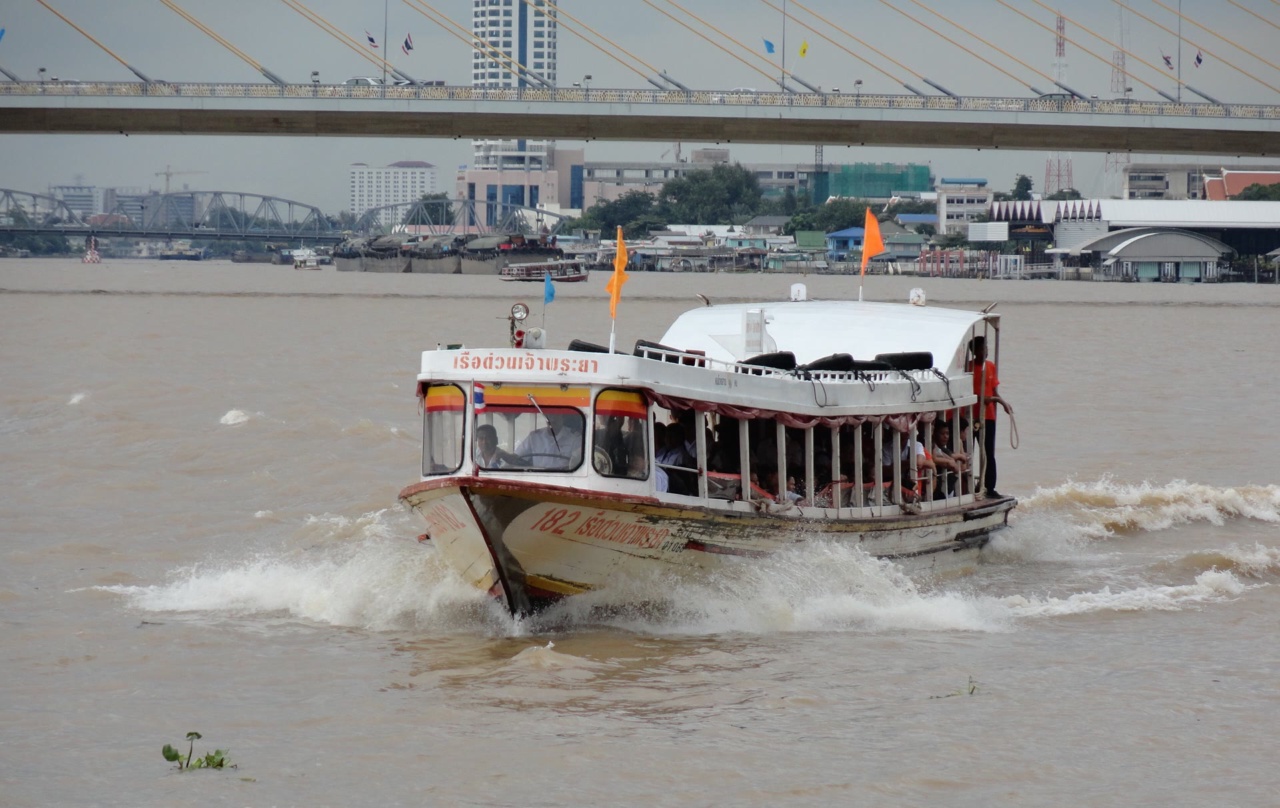
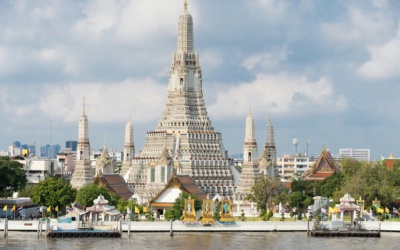
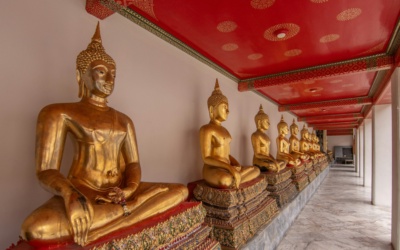
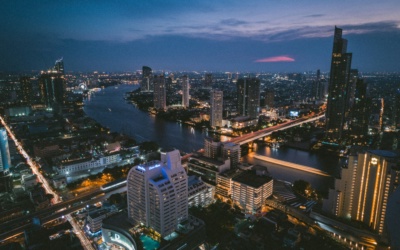
Thailand's capital is a sprawling, electrifying metropolis where gilded temples sit in the shadow of glass skyscrapers and Michelin-starred restaurants share streets with legendary street food stalls. The Grand Palace and Wat Phra Kaew (Temple of the Emerald Buddha) remain essential stops, but the city reveals its deeper character in neighborhoods like Chinatown's Yaowarat Road, the canal-side communities of Thonburi, and the creative district of Charoenkrung. Bangkok's BTS Skytrain and MRT subway make navigating the sprawl surprisingly manageable, and the Chao Phraya River express boats offer a scenic alternative. Do not skip the rooftop bar scene; sunset cocktails overlooking the skyline are unforgettable.
Chiang Mai
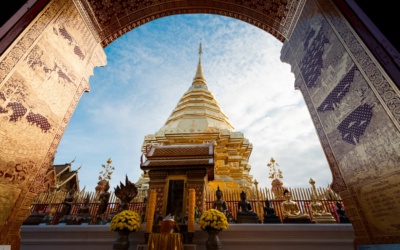
The cultural heart of northern Thailand, Chiang Mai is ringed by mountains and anchored by a moat-encircled Old City packed with temples. Wat Phra That Doi Suthep, perched on a hillside overlooking the city, is one of the north's most sacred sites. Chiang Mai is also a hub for cooking classes, ethical elephant sanctuaries, and treks into the surrounding highlands. The Sunday Walking Street market transforms Ratchadamnoen Road into a river of handicrafts, art, and northern Thai street food. The pace here is slower and the air cooler than Bangkok, making it a favorite for longer stays.
Chiang Rai
Often overshadowed by its neighbor, Chiang Rai province deserves its own visit. The White Temple (Wat Rong Khun) is a surreal, contemporary masterpiece, while the Blue Temple and Baan Dam (Black House) add to the region's artistic reputation. The Golden Triangle area where Thailand, Laos, and Myanmar meet offers historical context on the opium trade and stunning Mekong River scenery. Chiang Rai is also a launching point for visiting Akha, Lahu, and Hmong hill-tribe communities.
Ayutthaya
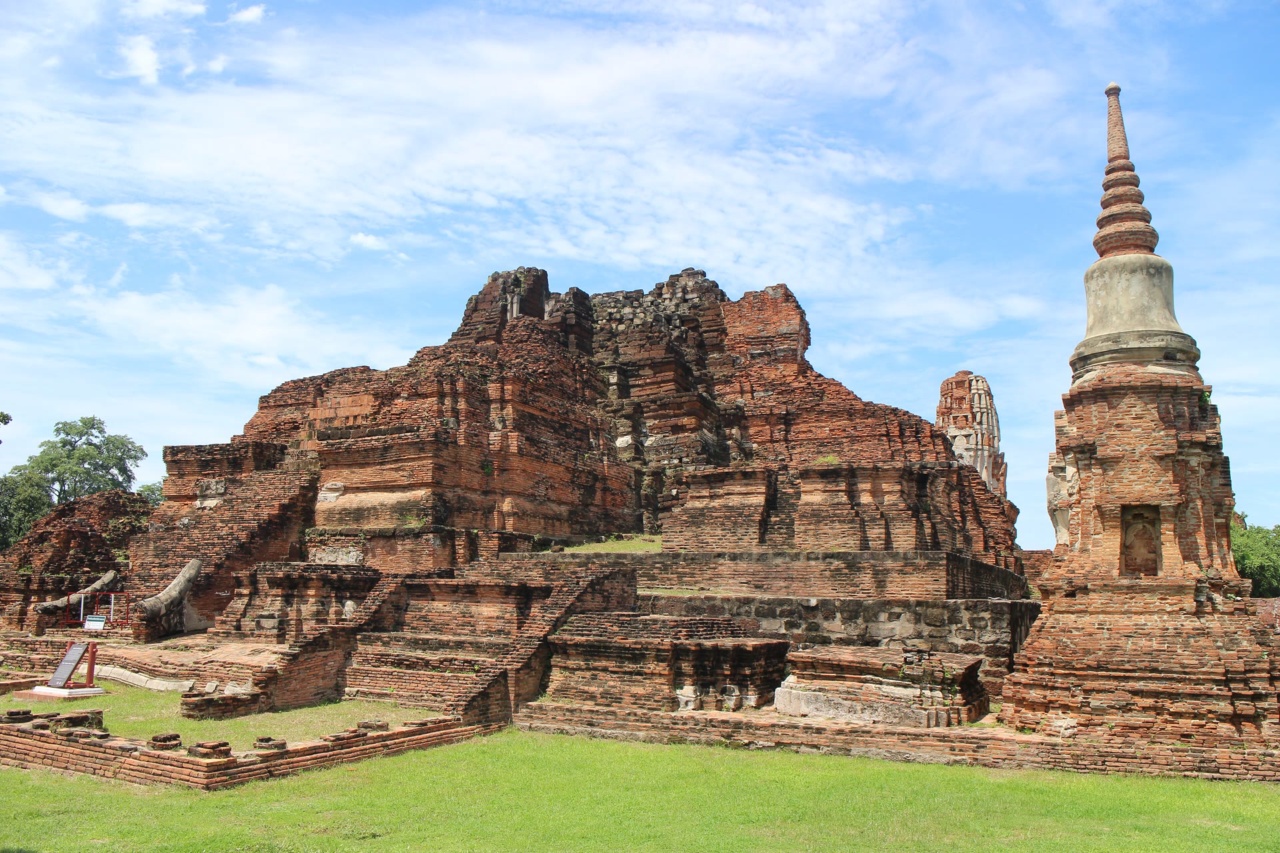
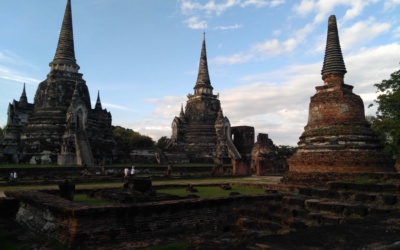
About an hour north of Bangkok by train,[1] the UNESCO-listed ruins of Ayutthaya are the remains of the second Siamese capital, founded around 1350.[2] Crumbling prangs (towers), headless Buddha statues, and atmospheric temple complexes like Wat Mahathat and Wat Chaiwatthanaram make this an easy and rewarding day trip or overnight excursion. Renting a bicycle is the best way to explore the historical park.
Sukhothai was the capital of the first Kingdom of Siam in the 13th and 14th centuries,[3] before Ayutthaya, and its historical park feels even more tranquil. The lotus-filled ponds, graceful walking Buddhas, and fewer crowds make Sukhothai Historical Park one of the country's most photogenic sites. Like Ayutthaya, it is best explored by bicycle.
Krabi and Railay
Krabi province on the Andaman coast is defined by dramatic karst cliffs, mangrove forests, and access to some of Thailand's finest beaches. Railay Beach, reached by boat from Ao Nang,[4] is a world-class rock climbing destination surrounded by powdery sand and emerald water. The Four Islands tour from Krabi Town is a popular day trip, and nearby Ao Nang serves as a comfortable base with plenty of restaurants and accommodation.
Phuket
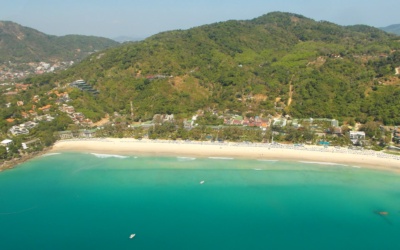
Thailand's largest island is a polarizing destination. The west coast beaches range from the party-heavy Patong to the quieter stretches of Kata Noi and Nai Harn. Phuket Old Town, with its Sino-Portuguese architecture, street art, and local eateries, offers a welcome contrast to the beach resort scene. Phuket also serves as a jumping-off point for day trips to the Phi Phi Islands and Phang Nga Bay with its iconic James Bond Island.
Koh Samui, Koh Phangan, and Koh Tao
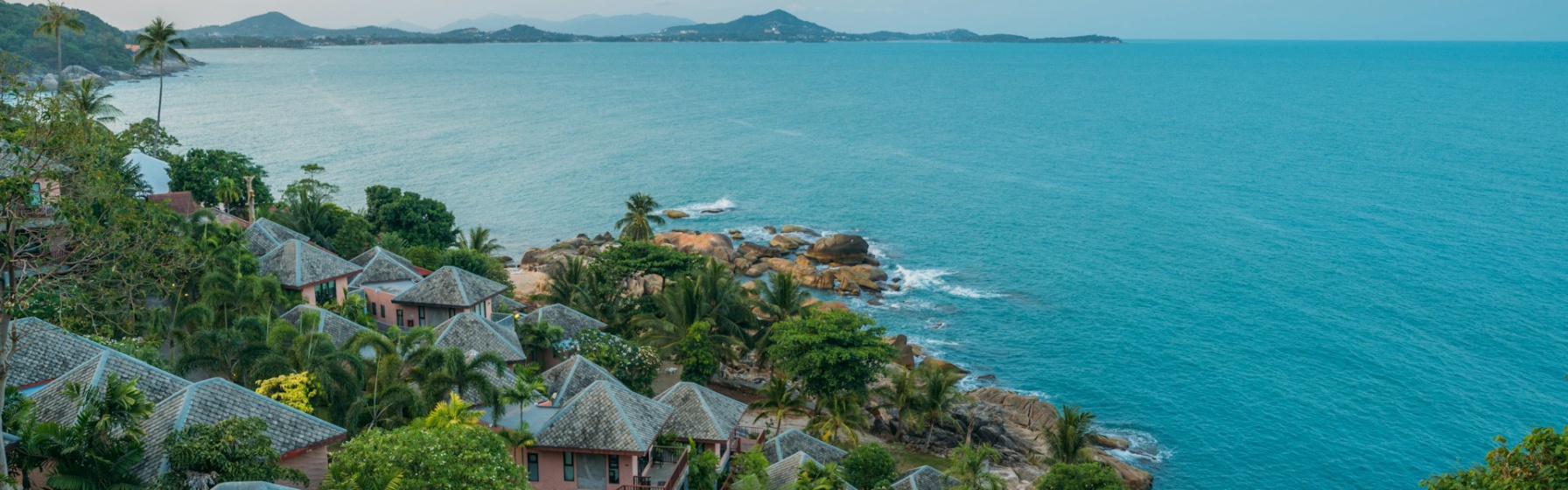
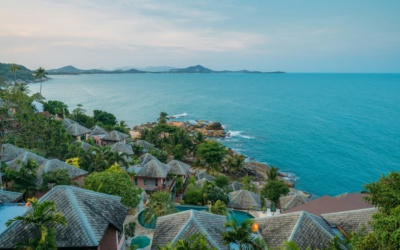
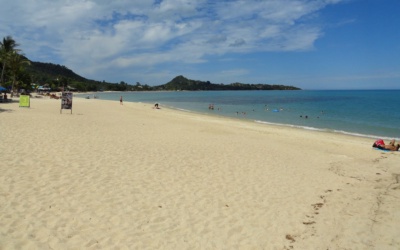
This trio of islands in the Gulf of Thailand caters to different tastes. Koh Samui is the most developed, with luxury resorts, a busy ring road, and family-friendly beaches like Chaweng and Lamai. Koh Phangan is famous for its Full Moon Party on Haad Rin beach,[5] but the rest of the island is surprisingly peaceful, with yoga retreats and hidden coves. Koh Tao is a popular place to learn to dive, with many dive schools and good snorkeling.
Khao Sok National Park
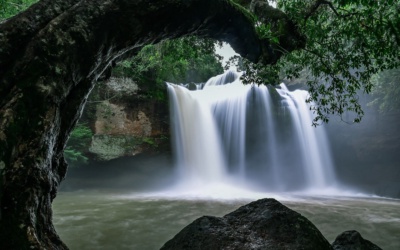
Khao Sok is a rainforest national park between Krabi and Surat Thani. Cheow Lan Lake, with its floating raft houses and towering limestone formations, is jaw-dropping. Night safaris, kayaking through jungle rivers, and the chance to spot gibbons and hornbills make this a must for nature lovers.
Pai
This small mountain town northwest of Chiang Mai has a bohemian, backpacker-friendly atmosphere with hot springs, waterfalls, a walking street market, and a canyon viewpoint that glows at sunset. The winding mountain drive from Chiang Mai is an adventure in itself. Pai is best enjoyed at a slow pace over several days.
Things to Do
Offers are only loaded from GetYourGuide after you click. GetYourGuide can then process your IP address and set cookies. Privacy Policy
GetYourGuide partner offers. GoAsia may earn a commission if you book through these offers. Check whether tickets or transfers are included, and follow the attraction's official booking and admission rules.
Getting Around
Thailand's domestic transport network is extensive and generally reliable. Airlines such as Thai AirAsia, Nok Air, and Thai Lion Air connect Bangkok with Chiang Mai, Phuket, Krabi, Surat Thani, and other cities.[6][7][8] Don Mueang Airport is a hub for low-cost airlines,[9] while Suvarnabhumi Airport is the base of Bangkok Airways and the airport from which Thai Airways lists its domestic routes.[10][11]
The Thai railway system, operated by the State Railway of Thailand, is a slower but scenic way to travel. Overnight trains run from Bangkok to Chiang Mai,[1] and the Southern Line serves Chumphon, Surat Thani (for Koh Samui connections) and Hat Yai, while the Northeastern Line reaches Ubon Ratchathani and Nong Khai.[12] Tickets are sold at stations, by phone and on the SRT D-Ticket website and app.[13]
Long-distance buses are plentiful. The state-owned Transport Co. (Bor Kor Sor) runs intercity buses from three Bangkok terminals: Mo Chit 2, Ekkamai, and the Southern Bus Terminal (Sai Tai Mai).[14] Private VIP coaches offer more legroom. Buy tickets from the operator, a terminal counter, or a reputable platform rather than from unofficial street agents.
Within cities, options vary. Bangkok has the BTS Skytrain, MRT subway, river boats, and a vast network of city buses and motorcycle taxis. In Chiang Mai and most smaller cities, red songthaews (shared pickup trucks) function as informal buses. The Grab ride-hailing app operates in Bangkok, Chiang Mai, Phuket, and other regions of Thailand.[15] For island hopping, ferries and speedboats are readily available, with Lomprayah and Seatran among the operators on the Gulf of Thailand.[16][17]
Renting a motorbike is extremely common, especially on islands and in the north. However, motorcyclists are the most at risk on Thai roads, and helmets are legally required for riders and passengers.[18] Always wear a helmet and ride defensively. Riding without a valid licence can invalidate your travel insurance, and hire motorcycles in tourist areas are often unregistered.[19] Visitors who drive are required by law to hold an International Driving Permit.[20]
Best Time to Visit
Thailand has three broad seasons: hot (roughly March to May), rainy (roughly June to October), and cool (roughly November to February).[21] The cool season is the most popular time to visit, with comfortable temperatures, lower humidity, and minimal rainfall across most of the country. This is peak tourist season, so expect higher prices and bigger crowds at popular destinations.
The hot season can be brutally humid, especially in Bangkok and the central plains. This is the low season for tourism, which means better deals on accommodation but less comfortable sightseeing conditions.
The rainy season brings daily afternoon downpours rather than all-day rain in most regions. Travel is still very feasible, and the countryside turns lush and green. The Andaman coast (Phuket, Krabi, Koh Lanta) receives much heavier rain from May to October, with Phuket averaging more than 400 mm a month in that period, and rough seas can disrupt boat services.[22] The Gulf coast (Koh Samui, Koh Phangan, Koh Tao) has a different monsoon pattern: on Koh Samui, rainfall peaks from October to December and November is the wettest month, while the months from February to September are much drier, making it a good alternative during the Andaman's rainy season.[22]
Northern Thailand (Chiang Mai, Chiang Rai, Pai) is pleasant from November to February but smoke haze affects the north and north-east of Thailand from December to April, which can worsen air quality and visibility.[18] Check air quality forecasts if visiting the north during this period.
Culture and Customs
Thai culture is deeply influenced by Theravada Buddhism, and respect for religious sites and symbols is paramount. When visiting temples, cover your shoulders and knees. Remove shoes before entering any temple building or Thai home. Never point your feet at a Buddha image or a person, and never touch anyone's head, as the head is considered the most sacred part of the body and the feet the lowest.
The Thai monarchy is deeply revered, and lese-majeste laws are strictly enforced. Insulting the monarchy, or defacing images of it, can lead to prison terms of up to 15 years.[18] Avoid making any disrespectful comments about the royal family, and stand when the royal anthem plays before movies in cinemas or during public broadcasts.
The Thai concept of sanuk (fun) and mai pen rai (never mind, no worries) permeates daily life. Thais generally avoid open confrontation and value a calm, smiling demeanor. Losing your temper in public, raising your voice, or showing visible frustration is considered extremely rude and will rarely help resolve a situation.
The traditional Thai greeting is the wai, performed by pressing your palms together at chest level and bowing slightly. You do not need to initiate a wai, but returning one when offered is polite. A simple smile and nod is also perfectly acceptable for tourists.
Tipping is not traditionally part of Thai culture but has become common in tourist areas. Rounding up a restaurant bill or leaving small change for good service is appreciated, and some higher-end restaurants already add a service charge. Taxi drivers do not expect tips, but letting them keep small change is common.
Dress modestly when visiting rural areas and religious sites. Beachwear is fine at the beach but inappropriate in towns, temples, and government buildings.
Food and Drink
Thai cuisine is one of the world's great culinary traditions, built on the interplay of sweet, sour, salty, spicy, and bitter flavors. Eating is a social activity, and meals are typically shared family-style with multiple dishes ordered for the table alongside steamed rice.
Essential dishes to try include pad thai (stir-fried rice noodles with shrimp, tofu, peanuts, and lime), som tam (green papaya salad pounded in a mortar with chili, lime, fish sauce, and tomato), tom yum goong (hot and sour shrimp soup with lemongrass and galangal), massaman curry (a rich, aromatic curry with potatoes and peanuts), khao soi (a northern Thai coconut curry noodle soup topped with crispy noodles), and pad krapao (stir-fried meat with holy basil, served over rice with a fried egg).
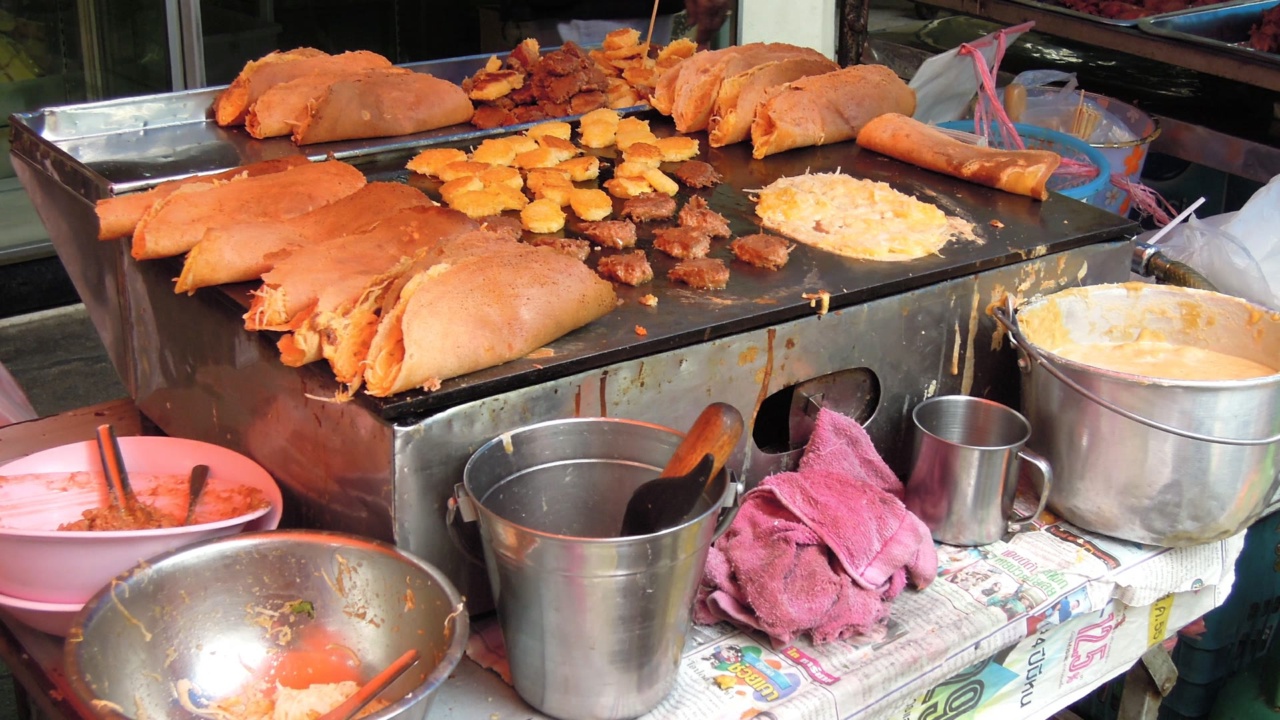
Street food is not just cheap; it is often better than restaurant food. Bangkok's street food scene is legendary. Look for stalls with high turnover and long lines of Thai customers. Night markets like Rot Fai (Train Market) and Jodd Fairs offer concentrated food experiences. In Chiang Mai, the Warorot Market and the Saturday and Sunday walking street markets are essential.
Thai food is often very spicy by Western standards. The phrase mai pet (not spicy) is useful, though dishes may still carry some heat. If you have dietary restrictions, note that fish sauce and shrimp paste appear in many dishes, including those that appear vegetarian. During Buddhist festivals, vegetarian food stalls marked with yellow flags become widely available.
Fresh tropical fruit is abundant and inexpensive. Mango with sticky rice (khao niao mamuang) is the quintessential Thai dessert. Do not leave without trying rambutan, mangosteen, dragon fruit, and, if you dare, durian, the pungent king of fruits that is banned from many hotels and public transport.
Thai iced tea (cha yen) and Thai iced coffee are sweet, creamy, and addictive. Local beers include Singha, Chang, and Leo. Thailand's nightlife scene ranges from sophisticated rooftop bars to raucous backpacker strips. Be aware that it can be illegal to buy, sell or consume alcohol on specific days, including religious holidays and voting days.[18]
Visa and Entry Requirements
Thailand’s current entry rules are nationality-specific. Following the Royal Gazette publication of 31 August 2026, effective 15 September 2026, Thailand revoked the 60-day visa-exemption scheme. For tourism, the Thai Ministry of Foreign Affairs now lists a 30-day visa-exemption scheme for 60 countries and territories and a new 15-day scheme for two.[23] This is not a universal allowance: check the official Thai MFA summary and current nationality list for your passport and travel purpose. Travelers who entered before 15 September 2026 may stay until the end of their permitted period, and other visa categories are not affected.[23]
For tourist travel, visa on arrival is now available for only three countries and territories.[23] Other travelers may need a tourist visa or e-visa. Visa-exempt entry at a land border is normally limited to two entries per calendar year, and your passport should be valid for at least six months after arrival.[24] If you need to stay longer, ask Thai immigration whether an extension is available for your passport and entry category, and verify the current duration and fee before relying on it.
Proof of onward travel (a flight or bus ticket out of Thailand) may be requested at check-in or upon arrival, so having a booking confirmation available is a sensible precaution. Immigration officials may also ask for proof of funds of at least 10,000 baht per person.[24]
Visa rules change periodically, so always verify the latest requirements with the Thai embassy or consulate for your nationality before traveling. Overstaying your visa carries fines, potential detention, and possible bans on future entry.
Thailand Digital Arrival Card (TDAC): All foreign nationals entering Thailand by air, land or sea must complete the digital arrival card online before arrival, and can submit it up to three days in advance.[25][24] Use the official Immigration Bureau portal. This card is separate from a visa. TDAC
Safety and Health
Thailand is generally a safe country for travelers, and violent crime against tourists is rare. The most common risks are road and motorbike accidents, petty theft, and scams.[18] Keep valuables secure, especially in crowded areas and on overnight transport. Use hotel safes for passports and excess cash.
Common scams include tuk-tuk drivers offering suspiciously cheap tours that end at gem shops or tailors where you face high-pressure sales. The "Grand Palace is closed today" scam is a classic; it is almost never actually closed during opening hours. Rental scams are also reported: some motorbike, jet ski and car rental companies hold your passport until you pay for real or fictitious damage, so never hand over your passport.[26] Book activities through reputable companies and avoid deals that seem too good to be true.
Road safety is a serious concern. Road accidents are common, including in resort areas such as Phuket, Pattaya and Koh Samui, and motorcyclists are most at risk.[18] Exercise extreme caution when driving or riding, always wear a helmet and avoid riding at night or after drinking.
For health, ask a travel health clinic which vaccinations and precautions suit your itinerary before you leave. Insect-borne diseases including dengue, chikungunya, Japanese encephalitis and malaria are a significant risk, particularly in the rainy season.[18] Use insect repellent and wear long sleeves during the day and night.
Most visitors stick to bottled or filtered water, which is cheap and available everywhere, although the Provincial Waterworks Authority states that the water it supplies is potable and meets WHO criteria.[27]
Pharmacies are easy to find, and private hospitals in Bangkok, Chiang Mai, and Phuket, such as Bumrungrad and Bangkok Hospital, are popular with foreign visitors. Research medical providers and choose with care.[18] Comprehensive travel insurance that covers medical evacuation is strongly recommended.
Budget Tips
Thailand remains good value for money, though costs have risen in popular tourist areas. Accommodation is the biggest variable: it is generally cheapest in Chiang Mai and the northeast (Isan) and most expensive on popular islands and in central Bangkok. Street food and local restaurants cost far less than Western food and beachfront restaurants.
Book domestic flights well in advance for the best fares. Overnight trains and buses save on a night's accommodation. In Bangkok, the BTS One-Day Pass costs 150 baht for unlimited rides on the Green Line on the day of issue, which pays off if you plan several trips.[28] Grab shows the fare before you book, which avoids haggling with unmetered taxis.[15]
Bargaining is expected at markets and with tuk-tuk drivers but not in shops with fixed prices, convenience stores, or restaurants. A friendly, smiling approach works far better than aggressive haggling. Aim for a fair price rather than the absolute lowest one.
The Thai baht is the national currency. ATMs are everywhere but charge a flat fee per withdrawal for foreign cards; Krungsri, for example, lists 250 baht per transaction.[29] This adds up quickly. Withdraw larger amounts less frequently to minimize fees, or use a travel-friendly bank card that reimburses ATM fees. Credit cards are accepted at hotels, malls, and upscale restaurants but not at street stalls, markets, or smaller shops. Always carry cash for daily expenses.
7-Eleven stores are on virtually every corner and are surprisingly useful for budget travelers. They sell cheap meals, snacks, SIM cards, toiletries, and even basic medications. Thai SIM cards with generous data packages are inexpensive and can be purchased at airports or any phone shop with your passport.
Finally, consider visiting during the rainy season (roughly June to October) for often lower accommodation prices, fewer crowds, and the same warm hospitality. The rain is manageable, and many travelers find the greener landscapes and quieter temples more rewarding than the peak-season experience.
Sources and background
Numbers in the text such as [1] refer to these sources.